
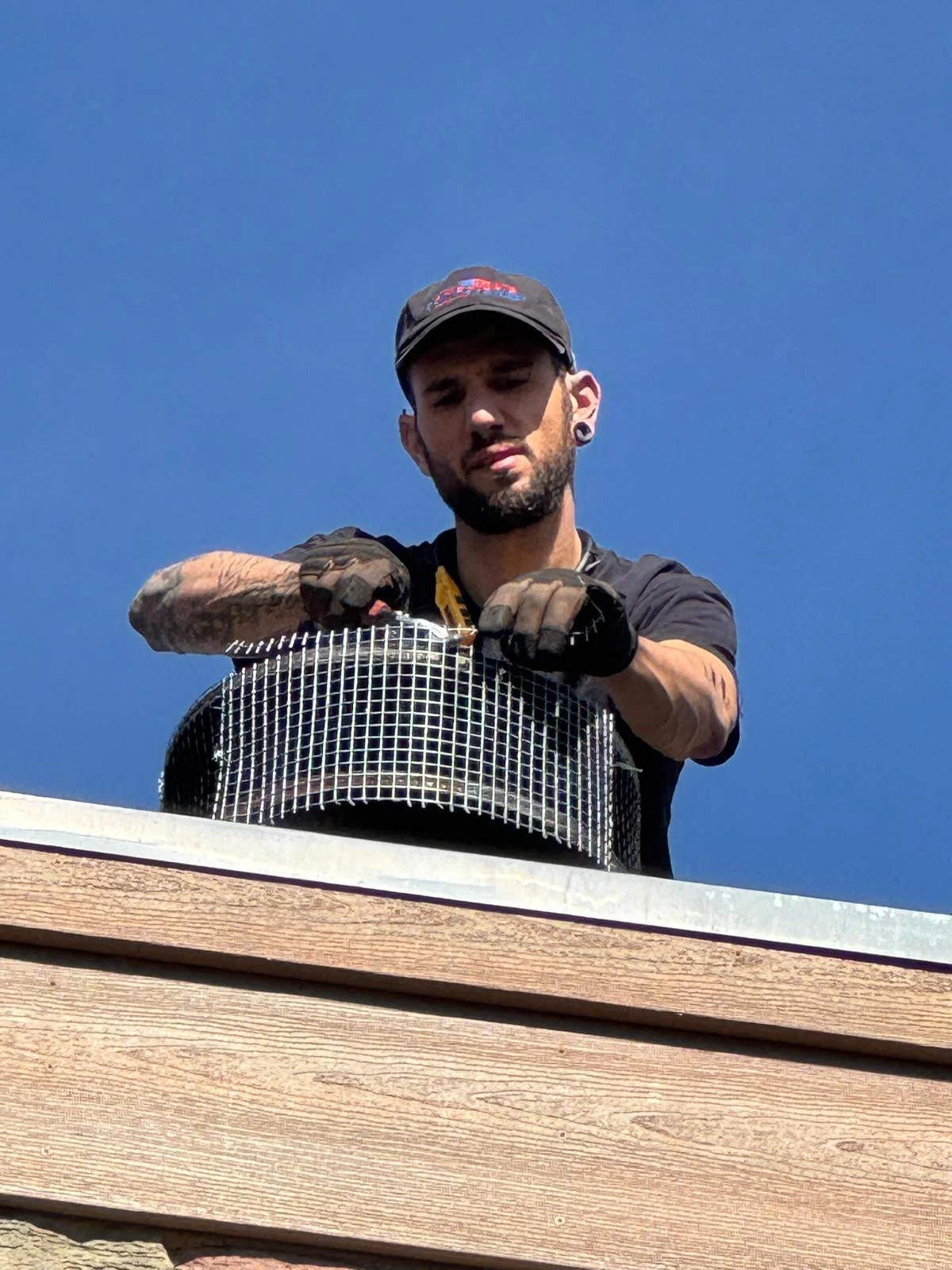
A chimney sweep service always starts the same way, no matter what the flue looks like once the light hits it. Michael pulls the damper. Then he checks the smoke chamber with a flashlight, looking for three things that cause trouble: creosote buildup, cracked or shifted flue tile, and anything living in there that shouldn’t be. Nests show up more than people expect. If a bird or a squirrel got in over the summer, animal removal from chimney happens as part of the same visit, not as a second appointment.
Only after that look does the brush come out. If the flue is dry and sooty, the cleaning takes ten or fifteen minutes. If it’s not, that changes the conversation. Michael tells you before he starts, not after.
Sweep or cleaning? Same job, two names
People search both terms and mean the same visit. A chimney cleaner and a chimney sweep are the same person doing the same work. The word “sweep” is just older. It comes from the days when the job really was a brush and a bucket, nothing more. Today it’s mostly inspection, with cleaning as whatever the inspection turns up.
Order matters more than the name. A sweep that skips the inspection and goes straight to brushing is guessing at a problem it hasn’t looked for. The cleaning is the cheap part of the visit. The diagnosis is the part that saves you money later. A cracked crown or a failing liner costs a lot more to fix in March than it does to catch in September.
How often should you clean your chimney?
Most valley homes burning four to ten fires a season need a full sweep every one to two years, with an inspection every year. Foothill homes burning daily from November through March build a season’s worth of creosote in months and need an annual sweep. Gas appliances need yearly inspection, rarely a brush.
That answer changes by how often you actually burn, not by the calendar. For more detail by appliance type and burn pattern, the guide on how often should you clean your chimney covers it further. Between visits, watch for the signs chimney needs cleaning on your own: a campfire smell indoors, dark flakes in the firebox, or smoke that hangs in the room instead of drawing up.
Wood, gas and pellet: different appliances, different service
A wood-burning fireplace, a gas insert, and a pellet stove don’t fail the same way, so they don’t get swept the same way either.
For a wood-burning setup, wood stove cleaning is the closest to the traditional job: brush, vacuum, and a look at the gasket seal on the door. Wood is also where the buildup turns into real labor, since it’s the only appliance of the three that produces creosote.
For a pellet appliance, pellet stove cleaning is a different mechanism entirely. Pellet stoves build up fine ash in the burn pot and exhaust vent rather than creosote on a flue wall. That ash has to come out, or it chokes the airflow the stove needs to burn clean.
For gas, gas fireplace cleaning looks almost nothing like the other two. There’s no creosote to speak of. The inspection is mostly about the burner and the pilot. It also confirms the venting is still sealed the way it was installed, since a gas leak or a blocked vent is a safety issue a wood chimney doesn’t have.
What we do about creosote
Creosote isn’t one thing. It shows up in three stages, and which one you’ve got decides how the job goes.
Stage one is dry and flaky, almost like soot. A brush clears it in minutes. Stage two is tackier, more like tar chips pressed into the mortar joints, and it takes a rotary brush and some patience to get it all.
Stage three is the one nobody wants. It’s a black glaze, shiny as a bowling ball, fused right to the tile. A brush won’t touch it. At that stage, creosote removal is a chemical process, sometimes spread across more than one visit.
Here’s the part most homeowners don’t know. You build stage three yourself, without meaning to. Damping a fire down overnight to keep it smoldering till morning is a cool, oxygen-starved burn. That’s exactly the kind of burn that glazes a flue.
Do that most nights for a few winters and I already have a rough idea what the flue looks like before the light goes up it. The full breakdown of creosote stages and what each one costs to remove is worth a read if you burn overnight regularly.
Keeping the mess out of your house
Sweeping a flue stirs up a lot of fine soot. Soot tracked across a carpet doesn’t come back out with a vacuum. So the firebox opening gets sealed off before the brush goes anywhere near it, and the debris gets contained and hauled out instead of left to settle on the mantel.
What we don’t do is leave that part to chance. A sweep that skips the containment step might save ten minutes, and you’ll be the one finding soot on the couch a week later.
When you don’t need a sweep this year
If you’re burning four or five fires a winter with dry, seasoned wood, a year’s worth of buildup usually isn’t stage two yet, let alone stage three. Get the $59 inspection instead of the full cleaning. It’s cheaper. It’s faster.
And it catches the things that hurt you: a cracked crown, a liner pulling away from the tile, a damper stuck from heat expansion rather than rust. That’s the most common reason people spray penetrating oil on a damper for a year before anyone tells them that’s not the problem. Sweep it when the inspection says there’s something worth sweeping.
The exception is anyone heating with wood daily through the winter, which describes a lot of the foothill towns more than the valley floor. That chimney earns its annual sweep honestly, and I wouldn’t wait on the inspection to tell you that.
What else we check while we’re up there
A sweep visit turns up more than creosote. A cracked crown, a gap in the flashing, or a flue tile that’s shifted are all things Michael can see from the same ladder he’s already on.
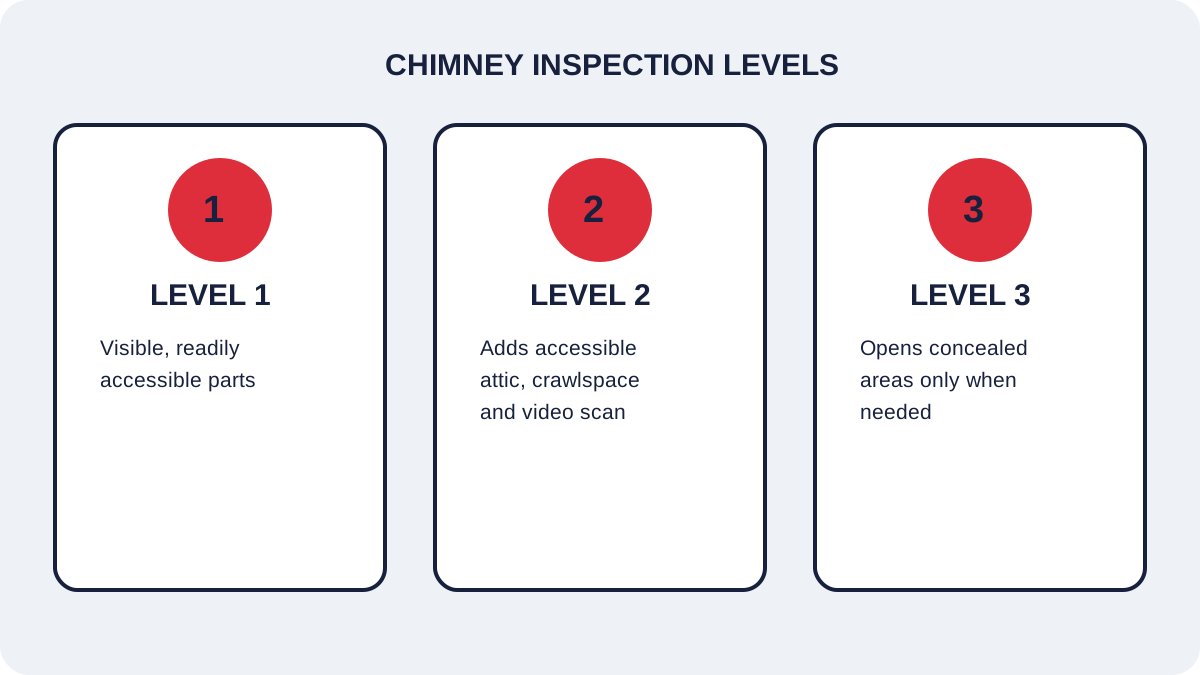
If something structural turns up, the honest move is to get the structure looked at before the winter rains, not push it to next season and hope. And if you’re not sure your chimney needs cleaning at all, the cheaper first step is usually to get it inspected before you light it, since the inspection is the same $59 either way. On systems where seeing inside the flue itself matters more than what’s visible from the roof, we’ll ask you to book the camera scan first and work from what that shows.
What the visit costs
Here’s the actual price list, not a guess dressed up as one.
| Service | Starting price |
|---|---|
| Chimney inspection | $59, credited into the job if you go ahead |
| Basic chimney cleaning | from $199 |
| Chimney cap installation | from $350 |
| Chimney crown rebuild | from $350 |
Everything past those four, like a Level 2 camera inspection, stage-three creosote removal, tuckpointing, or a liner replacement, is priced on site after the inspection. That’s a decision, not a gap: Michael quotes bigger work from what he actually sees, not from a range he made up before he got there. A full breakdown of chimney sweep cost by job type sits on its own page, and what our services cost lays out every starting number across the whole business on one screen.
Call (916) 833-2959, 7am to 7pm seven days, and book the $59 inspection. If the work turns out to be the $199 cleaning, that $59 comes off the bill. If it doesn’t, that’s the only charge for the visit.
Book before the rain starts
Sacramento’s wet season runs roughly November through April, and the seven dry months before it are when a flue actually gets checked, not while it’s raining sideways on the roof. Wait until the first cold snap and you’re booking alongside everyone else who just noticed their fireplace smells like last April’s storms.
The foothill side of the service area runs on its own clock. Homes in the wood-heating towns start burning daily as soon as the nights drop into the 40s, which is usually well before the valley lights its first fire of the year. If that’s you, a September or October sweep beats a January one, when the chimney’s already been in daily use for weeks.
Where we cover
Americas Chimney Sweep works across five counties measured from Nevada City: Nevada, Placer, El Dorado, Sacramento, and Yolo. If you’re searching for a chimney sweep in Sacramento, CA, or a chimney sweep in Roseville, CA, the same $59 inspection and the same one technician apply either way. Michael drives to the job himself. Nobody gets dispatched in his place.
Folsom comes up in calls more than most towns this far from Nevada City, and a chimney sweep in Folsom, CA is inside the service area. Out west, chimney sweep Elk Grove is also inside the service area. Grass Valley, Truckee, Placerville, Auburn, and Citrus Heights all sit inside the radius too, and if you’re not sure your address counts, check whether we cover your street before assuming either way.
What Sacramento-area homeowners say
Michael started this business in 2024. In about two years, he’s built a 4.95 average across 62 Google reviews. He’s replied to every single one himself, which is a different thing from a company that only replies to the bad ones. One Yelp reviewer, Brian C., put it plainly: “The owner was incredibly prompt, professional, and highly communicative.” If you want the fuller picture, read what neighbours actually said before booking.
“Michael did an excellent job cleaning out my fireplace and chimney and giving me honest recommendations to make it safer before next use.”
“Michael came by and cleaned our chimney. He did a very good and clean job.”
He’s licensed through the CSLB for masonry work, C-29, #1150991. The profile page introduces the licensed tech who does the work, with the same license number listed there for anyone who wants to check it twice.
Do I need to be home for a chimney sweep?
Yes. Someone eighteen or older needs to let Michael in and be reachable if he finds something worth discussing before he starts. Discussing findings over the phone doesn’t work well with a flashlight in a flue. Plan to be home the full twenty to thirty minutes, not just for the knock at the door.
Do you need to clean a chimney every year?
Most valley homes don’t. If you’re burning four to ten fires a winter, one season’s buildup rarely justifies the full $199 cleaning. Foothill homes burning daily from October through March usually do need it every year. Get it inspected every year regardless. That’s the $59 visit that decides whether the buildup is worth brushing out.
How long does a chimney sweep take?
The inspection alone runs twenty to thirty minutes. Add a brush job with average creosote and you’re looking at another thirty to forty five minutes. So a routine chimney sweep and inspection, in most Sacramento Valley homes, wraps in about an hour, door to door. Heavy stage two buildup pushes that longer.
How many fires before cleaning a chimney?
There’s no fixed count. It’s not about the number of fires, it’s how they’re burned. Twenty fires of dry, seasoned oak leave less soot than eight fires of damp, half split rounds. That’s why the $59 inspection exists, to see what’s built up instead of guessing from a tally.
Is chimney sweeping messy?
Not in the house. Michael works off a drop cloth at the hearth, and the brush pulls soot down into a containment bag instead of out into the room. Some fine dust settles near the firebox opening anyway, since brushing stirs the flue. The mess mostly stays contained to that one spot.
What happens during a chimney sweep?
Michael opens the firebox and runs a flashlight up the flue before any brush touches it. If the inspection turns up real buildup, he brushes from the top down or the bottom up depending on roof access, catching debris in a vacuum instead of letting it fall loose into the firebox.
When is the best time to get a chimney swept?
Late summer through early fall, before the first cold snap fills every calendar for miles. Book in September and you’re scheduled ahead of rain season instead of waiting behind homeowners who smelled smoke on the season’s first fire. Waiting until a cold November night reveals the problem is the expensive way to find out.
FAQs before you book
How do I find a chimney sweep near me I can actually trust?
Ask for a license number before anyone gets on your roof, not after. A certified chimney sweep isn’t one fixed credential, so the number matters more than the word. Ours is CSLB #1150991, C-29 Masonry, which you can verify on the state’s own site.
What’s actually included in a chimney sweep service?
Every visit starts with the $59 inspection. That’s a look at the flue, the crown, the flashing, and the smoke chamber. Cleaning happens if the inspection finds buildup worth removing. Anything beyond a basic sweep, like a cap, a crown rebuild, or a repair, gets priced separately once it’s been seen in person.
Do I need a chimney cleaner every single year?
Not always. Valley homeowners burning a handful of fires a winter often go a year or two between full sweeps, with an inspection in between. Daily wood-heat homes, mostly in the foothills, do need it annually. The inspection is what tells you honestly which one applies to your chimney.
Why isn’t my fireplace drawing properly?
Usually one of three things. A cold flue that hasn’t warmed enough to reverse a downdraft, negative pressure from a tight modern house pulling air the wrong way, or a partial blockage from creosote, a closed damper, or a nest. Which one it is decides the fix, and that’s what the inspection sorts out first.
Is fireplace cleaning near me different from a wood stove or pellet stove cleaning?
Yes. A wood fireplace deals with creosote on the flue wall. A pellet stove deals with fine ash in the burn pot and exhaust vent instead. A gas fireplace has almost no buildup at all, and the inspection there is mostly about the burner and the venting seal.
What should I expect from a chimney service near me if I’ve never had one done?
Expect the inspection first: a flashlight look at the firebox, damper, and flue, plus a check of the crown and flashing from the roof if it’s accessible. That takes twenty to thirty minutes. Cleaning follows only if the inspection finds something worth cleaning. You’ll hear the reason either way.
Are chimney cleaning services near me worth it if I barely use the fireplace?
Often not the full cleaning, no. A fireplace used a handful of times a winter rarely builds enough creosote to justify $199 every year. The $59 inspection still makes sense on that schedule, since a cracked crown or damaged flashing has nothing to do with how often you burn.
The $59 inspection is the fastest way to turn any of this into a real answer for your own chimney, not a general one. Call (916) 833-2959, 7am to 7pm seven days, and ask for it by name. If a phone call doesn’t fit your day, you can grab a time slot online instead and Michael will call to confirm.
Michael owns Americas Chimney Sweep. He does every job himself, from the first inspection to the last brush pass.