
Most occasional burners need an inspection every year and a sweep only when that inspection finds enough buildup to matter, usually every one to three years. Homes that heat with wood all winter build creosote roughly ten times faster and need a sweep every year without exception. The inspection is what tells you which one you are. Guessing isn’t.
An inspection and a sweep aren’t the same visit, and booking chimney sweeping without one first is a guess dressed up as maintenance. If the inspection turns up buildup, what you’re quoted next depends on the stage. Light buildup falls inside the basic chimney sweep cost in Sacramento range. A hard glazed stage needs professional creosote removal instead of a standard brush pass, and that’s a different job entirely. One visit doesn’t cover both.
How often should a chimney be cleaned?
There’s no single number, because two households burning different amounts of wood build creosote at completely different rates. Get an inspection every year no matter what, and let the buildup it actually finds, not the calendar, decide whether this is a sweep year or a skip year.
NFPA 211, the national fire code covering chimneys, fireplaces, and vents, calls for an inspection at least once a year regardless of how much you burned. That part isn’t tied to wood volume at all. It catches things buildup never will, like a cracked flue tile, a shifted crown, or clearance that’s closed up over the years. The sweep is the piece that scales with use, and the Chimney Safety Institute of America builds its own guidance on that same annual-inspection baseline.
So the calendar decides the inspection, and the wood pile decides the sweep.
People ask why the industry didn’t just settle on “once a year” for both. Fair question. A fixed number is easier to print than it is to defend.
A cracked flue tile doesn’t care how much wood you burned. It needs the yearly check regardless. Creosote is different. It’s a byproduct of combustion, and no combustion means no creosote, which is why a light burner’s flue can genuinely go a couple of winters untouched.
The real formula: burn habits, not the calendar
Three burn patterns cover almost every chimney around Sacramento, and each one lands in a different place after one season.
| How you burn | Typical buildup after one season | What that means |
|---|---|---|
| Occasional, 4-10 fires a winter, for ambiance | Light, dry, flaky: stage one | Inspect every year. Sweep only when the inspection says so, often every 2-3 years. |
| Regular weekend burner, roughly a cord a season | Stage one sliding into stage two | Inspect every year. Plan on a sweep most years. |
| Wood as primary heat, daily fires November through March | Heavy, stage two heading into stage three | Inspect and sweep every single year. No skipping. |
Field note: ask a homeowner how many cords they burned last winter and most don’t know. Ask how many times they refilled the wood rack, and they always know that number cold. It’s usually the better one to work from, since most people underestimate a cord until they actually count the refills instead of guessing at a number.
A rough way to translate that into your own answer, without a scale or a calculator:
- Refilled the rack once or twice all winter, mostly for a fire on cold or rainy nights: you’re the occasional burner, row one.
- Refilled it most weekends through the season, oak or almond, seasoned before you burned it: you’re the middle row.
- Refilled it weekly or more, and the fire was on most nights it was cold: you’re the daily burner, row three, no matter what the calendar says about last year.
When you don’t need to clean your chimney
If you lit four or five fires all winter with dry, seasoned wood, and last year’s inspection came back clean, this isn’t a sweep year. Skip it.
An inspection is still worth doing. It’s cheap, it’s fast, and it catches the things buildup doesn’t, like a cracked tile or a crown that’s starting to fail. But sweeping a flue that doesn’t need it burns a Saturday and some money for nothing. The inspection is what proves that instead of assuming it.
The exception is anyone heating with wood as a primary source. If you’re burning daily through the winter, you don’t get to skip a year, and no inspection is going to change that answer.
Same logic applies to gas. If your fireplace runs on gas and never burns wood, the creosote question doesn’t apply. Pilot assemblies, venting, and burners still need attention, but that’s different from a wood-flue sweep. C-29 covers masonry only, not gas fitting. Michael does the work himself.
Best time to clean your chimney
Late summer through early fall, before the first cold snap, is the best time to clean chimney flues in this part of California. Book after Thanksgiving and you’re competing with everyone else who waited, on the coldest nights of the year.
Sacramento’s wet season runs roughly November through April, and Sacramento Metro AQMD’s mandatory Check Before You Burn program under Rule 421 can restrict burning on forecast no-burn days across that same stretch. Getting the flue clean before that window opens means you’re not stuck choosing between a dirty chimney and a night you’re not allowed to light it anyway.
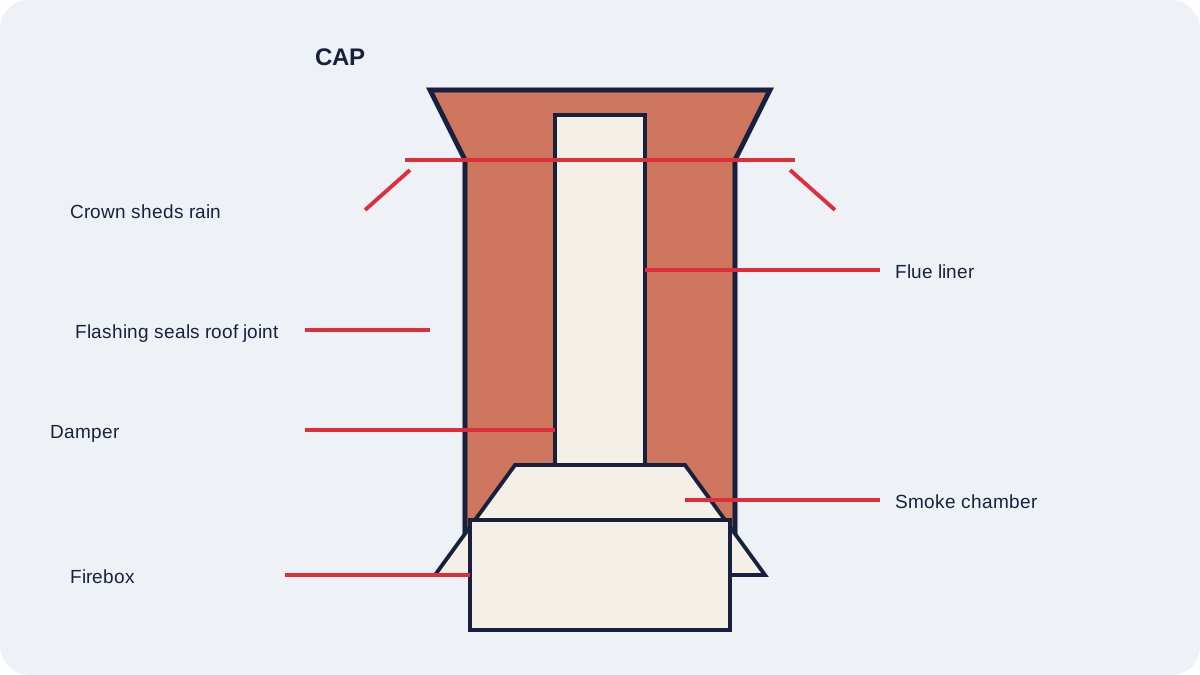
While the ladder’s out, it’s worth knowing what you’re dealing with structurally, not just how dirty it is. A masonry chimney and a prefab metal one build creosote differently and need different tools, so find out which kind you have before you assume last year’s price still applies. And a real inspection checks for more than soot. It should look for these marks in the flue that mean the buildup already did damage.
Michael runs every inspection himself, across the five counties around Nevada City, and he’s the one deciding whether your flue needs a brush this year or can wait another. There’s no dispatcher assigning the call to whoever’s closest.
If you want to know more about who that is before you book, go meet the person who will actually be at your house. His rating sits at 4.95 across 62 Google reviews, and he’s answered every one of them himself. Michael is licensed through the CSLB, C-29, #1150991.
FAQs before you book
Do I need to clean my chimney every year?
Only if you’re heating with wood daily through the winter. Occasional burners, four to ten fires a season, usually need an inspection every year but a sweep only every one to three years, once the inspection confirms there’s actually something to remove.
What happens if you skip a chimney cleaning?
Creosote keeps building on top of whatever was already there, moving from a light stage-one coating toward a harder glaze over successive seasons. Thick buildup is what turns a normal fire into a chimney fire, and it’s why the annual inspection matters even in years you skip the sweep.
Can I tell if my chimney needs cleaning without an inspection?
Not reliably. Buildup forms out of sight, above the smoke chamber and up the flue, and a cracked tile or failing crown gives no visible warning from the firebox. A light up the flue is the only way to know instead of guessing.
What’s the best time of year to book a chimney sweep?
Late summer into early fall, before the first fire of the season and before the wet-weather months restrict outdoor work. Waiting until the weather turns means booking against every other homeowner who also waited.
If you’re not sure which schedule you’re actually on, that’s what the $59 inspection is for. It’s deductible: if the inspection turns into a sweep, the $59 comes off the price of the job, and if it comes back clean, that’s the only cost of finding out. Call (916) 833-2959, 7am to 7pm seven days, and ask for the inspection instead of guessing at the calendar.