
Creosote removal isn’t a bigger version of a regular sweep, and that’s the part almost nobody explains up front. A licensed chimney sweep checks for creosote on every visit. But which stage you’ve got decides whether the fix takes ten minutes or three trips out to your house. Stage one is dry and flaky. Stage three is a hard black glaze fused to the tile, and that’s the reason “creosote removal” and “chimney sweep” aren’t always the same visit.
What is creosote, exactly
Creosote is the residue left behind when wood smoke cools faster than it should on its way up the flue. It’s basically tar. It’s made of unburned wood particles, soot, and moisture, and it sticks to whatever surface it touches. The cooler and smokier the burn, the more of it forms. And the harder it gets over time.
The three stages of creosote
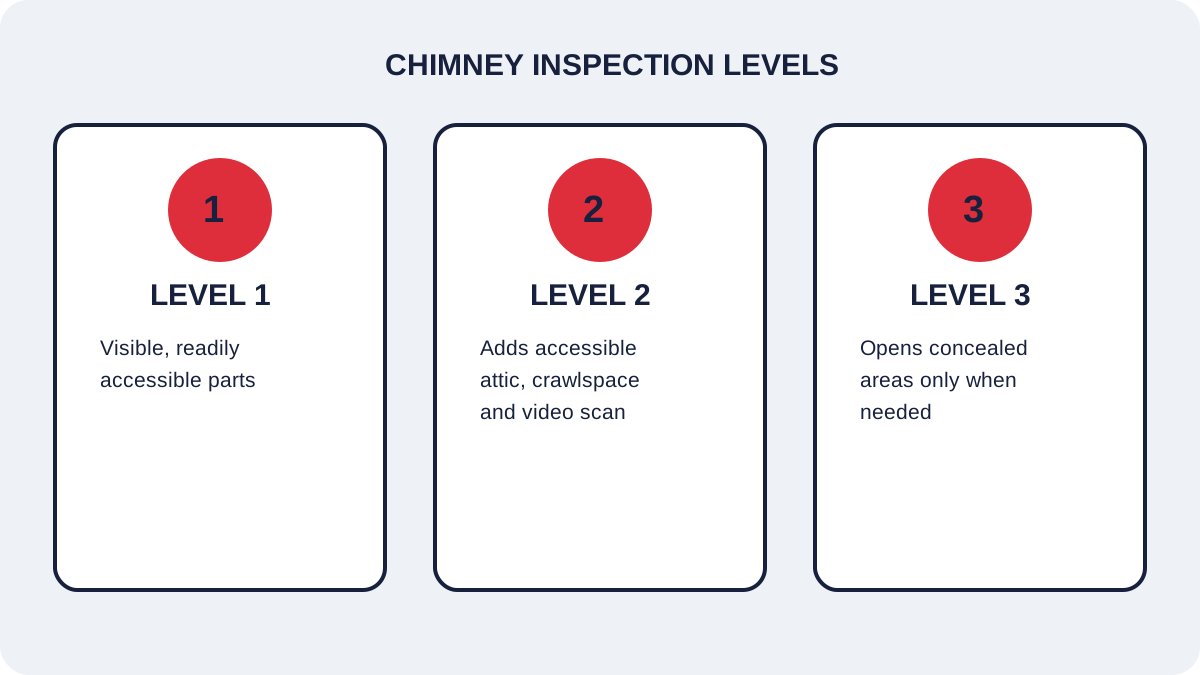
Not all creosote is the same, and the three stages of creosote decide what kind of job you’re actually booking.
Stage 1 creosote is dry, flaky, almost like soot. A brush clears it out in about ten minutes, and it’s what you’ll find in most fireplaces that only burn a handful of nights a winter.
Stage 2 creosote is tackier. Think tar chips pressed down into the mortar joints instead of loose flakes on the surface. It takes a rotary brush and more time. But it’s still mechanical work. No chemicals yet.
Stage 3 creosote is a hard, shiny glaze, closer to a bowling ball finish than soot, fused right to the flue tile.
A brush will not touch it.
That’s the point where creosote removal stops being part of a regular sweep and turns into its own visit.
Glazed creosote removal: why stage three needs more than a brush
Some companies call this the glazed creosote removal process, or sometimes pcr chimney cleaning. Same idea, different name: breaking the glaze down chemically instead of scraping it off. It’s a repair, not a cleaning.
Michael breaks it down chemically, over two or three visits in the worst cases. The chemical softens the glaze enough that a rotary head can finally get purchase on it. Then it’s a slow grind back down to bare tile, not a quick pass.
You build stage three yourself, usually without knowing it. Damping a fire down overnight to keep it smoldering until morning is a cool, oxygen-starved burn, and that’s exactly the kind of burn that glazes a flue. Burning wood that’s still wet does the same thing. Wood needs seasoned firewood moisture content under 20 percent to burn hot and clean, and green or wet wood never gets there.
Do that most nights for a few winters, and Michael already has a rough idea what your flue looks like before the light goes up it. If you’ve been damping the fire down every night since October, plan on the chemical process, not the brush.
What this costs
Every visit, whatever stage you’re on, starts with the same $59 inspection. Michael opens the firebox, gets a light up the flue, and tells you which stage you’re looking at before anything else happens. If you go ahead with the work, that $59 comes off the price. If you don’t, it’s the only charge for the visit.
| Service | Starting price |
|---|---|
| Chimney inspection | $59, credited into the job if you proceed |
| Basic chimney cleaning (stage 1 or light stage 2) | from $199 |
Stage 3 creosote removal doesn’t have a posted starting number. That’s on purpose. A glaze that’s a quarter inch thick across three feet of flue takes a lot longer to break down than a light glaze at the smoke chamber only. Pricing both the same would mean guessing wrong on one of them every time.
Michael prices it on site, after the $59 inspection shows him what he’s actually dealing with, the same way he prices anything past the six services with a posted number. For where creosote removal cost sits against everything else the business runs, chimney sweep cost in Sacramento lays out the full list on one screen.
A stage-three chemical treatment is often spread across two or three visits. The rest is priced on site, after someone has looked at it.
Call (916) 833-2959, 7am to 7pm seven days, and ask for the $59 inspection. That’s the only way to know which stage you’re on before you spend anything else.
How Michael breaks down glazed creosote
- He runs the $59 inspection first and confirms it’s actually stage 3, not a heavy stage 2 that still responds to a brush.
- He applies a chemical treatment to the glaze and lets it sit, softening the bond between the glaze and the tile.
- He works it with a rotary head once it’s soft enough to break, in sections rather than the whole flue at once.
- He checks what’s left and repeats the treatment on anything that didn’t come loose, which is why bad cases run two or three visits instead of one.
- He inspects the tile underneath once the glaze is gone, since heavy glaze sometimes hides a cracked or shifted tile a homeowner would never see on their own.
That’s the whole process. No shortcuts in it.
Stage-three glaze gets a chemical treatment before the loosened deposit is removed. The product isn’t named because no brand has been confirmed for every job.
When you don’t need this
Most chimneys never get anywhere near stage three. That’s most homes. If you’re burning four or five fires a winter with dry, seasoned wood, you’re looking at stage one, maybe the start of stage two after a few years. That comes off with a regular brush during a standard sweep. The $59 inspection is what confirms it instead of assuming the worst.
The chemical process only makes sense once the glaze has actually formed and a brush has already failed to move it. Booking it before that point is paying for a job you don’t need yet.
While Michael’s up there
A stage 3 flue rarely shows up alone. It has company. If the buildup is that heavy, the appliance behind it usually needs a look too.
On a wood stove cleaning service visit, heavy glaze in the stovepipe changes the plan the same way it does in a masonry flue. A pellet stove cleaning service call is different, since pellet appliances build up fine ash instead of creosote. But Michael still checks the vent for it while the ladder’s already out.
Why the foothills build glaze faster
Sacramento Valley homes usually burn four to ten fires a season, mostly for ambiance. That’s rarely enough to reach stage three on its own. The foothills are different. In Grass Valley, Nevada City, and Pollock Pines, wood is the actual heat source, not the occasional fire. Burning daily from November through March builds roughly ten times the creosote load of a valley home over the same winter.
Add in the habit of damping a fire down overnight to keep the house warm until morning, which is common in a house that heats with wood. Now you’ve got the two conditions that build glaze stacked on top of each other. That’s why most of the stage-three jobs Michael runs are up in the foothills, not down in the flatland.
Proof, if you want it
The rating sits at 4.95 across 62 Google reviews, and Michael has answered every one himself. You can see how this went for other people on your street before you book, especially if you want to see what a heavier cleaning looked like for someone else’s flue. Numbers only go so far.
“Michael did a thorough job on my chimney, carefully removing each part and scouring it. My chimney was completely full of vitrified soot …”
Michael is licensed through the CSLB for masonry work, C-29, #1150991. Chemical creosote removal is cleaning work, not masonry, so it doesn’t fall under that license the way a crown rebuild would, but Michael runs both kinds of jobs himself. Nobody gets sent in his place.
Where this covers, near Sacramento
Americas Chimney Sweep runs creosote removal across five counties measured from Nevada City: Nevada, Placer, El Dorado, Sacramento, and Yolo. For the valley side of that area, Sacramento chimney and fireplace services get the same $59 inspection and the same stage-by-stage pricing. Most valley flues never make it past stage one anyway.
Can creosote catch fire?
Yes, and that’s the whole reason removal matters. Creosote is condensed wood smoke, and it’s flammable at flue temperatures a normal fire reaches easily. Stage one soot burns fast and cool. Thick stage three glaze burns hotter and longer, which is what turns an ordinary fire into one that cracks tile and threatens the roof.
How do you remove glazed creosote?
Brushing doesn’t touch stage three glaze, so the fix is a chemical process that softens it in layers instead of scraping it off in one pass. Michael applies the treatment, lets it work, then removes what’s loosened, typically across two or three visits. It’s not something to attempt with a wire brush and a weekend.
How fast does creosote build up?
Faster than most people think, and burn habits matter more than the calendar. A handful of fires with dry, seasoned wood barely coats the flue in a season. Burn green or wet wood, or damp a fire down overnight to make it last, and you can grow a real glaze layer in one winter.
What causes creosote buildup?
Incomplete combustion is the cause, every time. Cool wood smoke doesn’t fully burn off on its way up the flue, so it condenses on the cooler masonry instead of leaving as clean vapor. Wet firewood burns cooler than seasoned wood, and a fire damped down to smolder overnight is the coolest, smokiest burn there is.
What causes stage 3 creosote?
Stage three happens when the same cool-burn habits repeat for more than one season. Each damp or oxygen-starved fire leaves another film of tar on top of the last, and heat from later fires bakes that film harder instead of clearing it. After several winters, the deposit turns into hardened glaze instead of loose soot.
FAQs before you book
How much does creosote removal cost?
The visit starts with a $59 inspection. Basic chimney cleaning starts at $199, while other work is priced in person after Michael sees the flue.
Is creosote dangerous?
Yes. Creosote is flammable, and a heavy buildup is what turns a normal fire into a chimney fire once it ignites inside the flue. Stage 3 glaze is the riskiest form, since there’s more of it and it’s harder to see how far it’s spread without a light and a mirror up the flue.
What does stage 1 creosote look like?
Dry, black or brown, and flaky, closer to soot than tar. It brushes out in minutes during a standard sweep and doesn’t need any chemical treatment. Most valley fireplaces that burn a handful of nights a winter never get past this stage.
What does stage 2 creosote look like?
Tackier than stage 1, more like tar chips pressed into the mortar joints than loose flakes on the surface. It still comes off mechanically, with a rotary brush and more time than stage 1 takes, but it’s a warning sign stage 3 isn’t far off if the burn habits don’t change.
What happens if I ignore stage three creosote?
The glaze keeps building with every fire you burn on top of it. Thick glaze is what turns a normal fire into a chimney fire once it ignites inside the flue. It also traps heat against the tile in a way loose soot doesn’t, which is part of why the fix gets more involved the longer it sits.
How long does a stage-three visit take?
Plan on two or three visits for stage-three glaze. Thickness, flue length, and how the deposit responds to treatment decide the time between them.
What’s covered if the glaze comes back after removal?
The inspection is the first step. Call (916) 833-2959, 7am to 7pm, seven days, and Michael will tell you what the flue needs before work begins.
Michael owns Americas Chimney Sweep. He runs the $59 inspection and the chemical breakdown himself, start to finish.