
How Do I Know If My Dryer Vent Is Clogged?
The clearest sign is a load that needs two cycles to dry. The list below covers six more. Any two of them together mean the line is restricted.
- The dryer takes two cycles to dry a single load that used to take one.
- The dryer or the top of the machine is hot to the touch after a normal cycle.
- You catch a burning smell from the dryer, especially in the first few minutes.
- Lint collects around the outside vent hood instead of blowing clear of it.
- The vent hood’s flap doesn’t lift when the dryer is running.
- Clothes come out damp at the seams or the waistband even after a full cycle.
- The dryer shuts off mid-cycle on its own, which usually means the thermal cutoff tripped.
If your dryer takes too long to dry and none of these seven line up, the vent might not be the problem. I’ll cover what else it could be during the inspection instead of guessing over the phone.
Why a Clogged Vent Is a Fire Risk, Not Just a Slow Dryer
Lint is compressed cotton fiber. It’s close to kindling in how easily it catches. A clear vent carries it straight outside on every cycle. A restricted one doesn’t. It packs against the duct walls instead, a little closer to the heating element with every load that runs.
Add heat to that picture and the risk stops being theoretical. A dryer that can’t exhaust properly runs its heating element longer and hotter to get a load dry. That heat has nowhere to go. It goes back into a duct that’s already full of lint.
The older accordion-style transition ducts, foil or plastic, are the worst of it. They sag. They trap lint in every ridge, and they sit closer to the heat source than anything else in the system.
How I Clean a Dryer Vent
- I disconnect the transition duct at the back of the dryer and check the drum’s own lint trap and housing first, since a lot of vent complaints turn out to be a torn trap or a gapped housing leaking lint into the wrong space.
- I run a brush the full length of the line, from the dryer connection to the exterior hood, breaking loose whatever’s packed against the walls.
- I vacuum out what the brush knocks loose so it doesn’t just resettle a few feet further down the run.
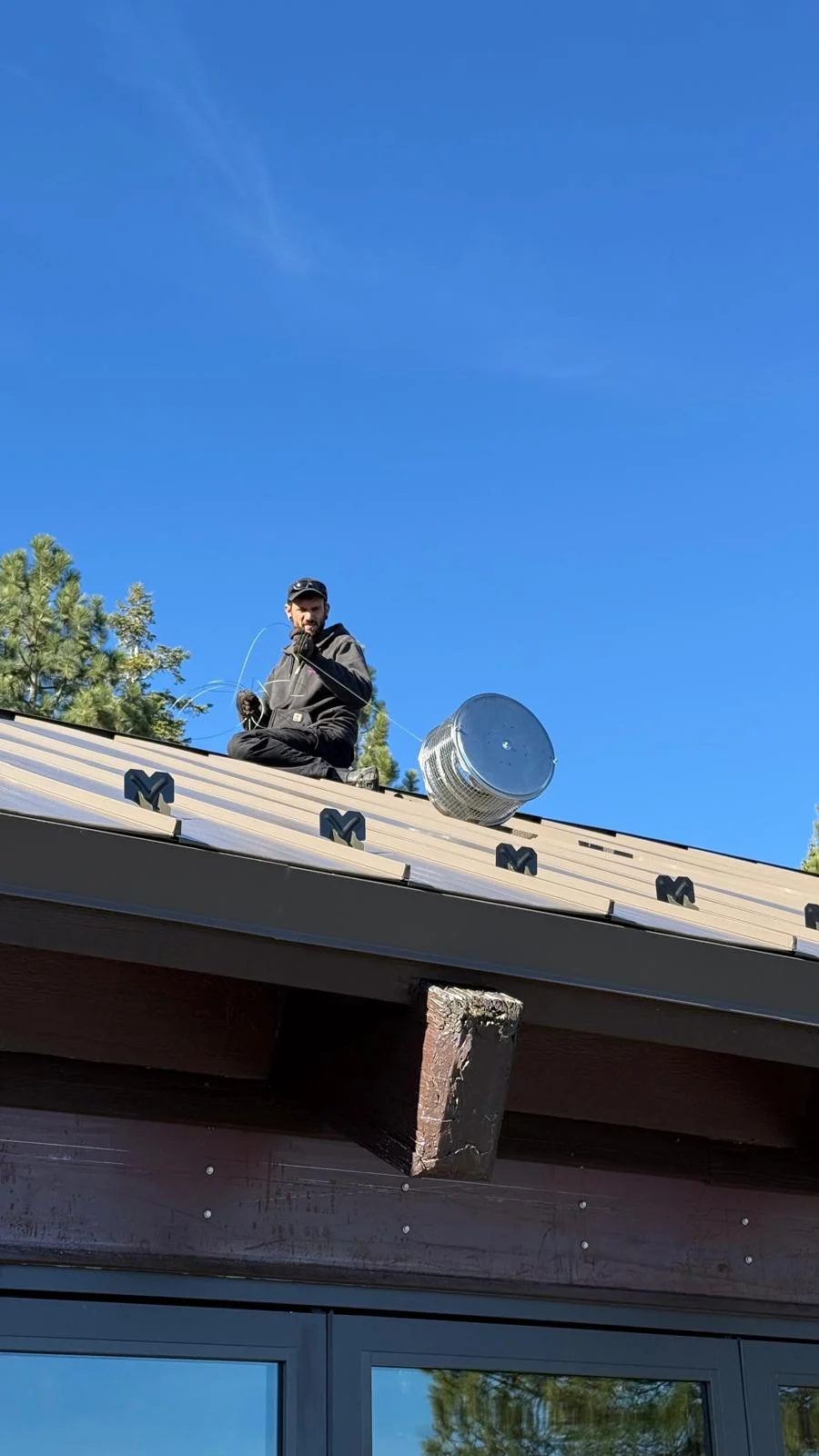
- I check the exterior hood and confirm the flap opens freely and closes back down on its own, since a stuck flap invites birds and rodents about as often as it blocks airflow.
- I put the dryer back together, run it, and confirm real airflow at the hood before I call the job done, not just that the brush came back clean.
Some people call this dryer exhaust cleaning. Same job, different name.
What It Costs
| Job | Starting price |
|---|---|
| Dryer vent inspection | $59, credited to the job if you proceed |
| Standard cleaning, one dryer, one run | from $150 |
That $150 starting price covers a standard single dryer, one run, one termination point. If the inspection turns up something bigger, a crushed section that needs replacing or a full reroute, I price that in person. Not over the phone. For a full breakdown of where the number moves, dryer vent cleaning cost walks through it, or check the price list for everything else I run.
Call (916) 833-2959, 7am to 7pm, seven days, and ask for the $59 dryer vent inspection. It’s credited straight into the $150 cleaning if you go ahead, so you’re only ever paying for one visit.
Long Runs, Second-Floor Laundry, and Roof Terminations
Newer builds in Roseville, Rocklin, and El Dorado Hills put a lot of laundry rooms on the second floor. The duct runs sideways through a wall cavity before it ever gets a straight shot outside. Every extra foot and every elbow in that run is another place lint hangs up. A twenty-five-foot run with four elbows collects buildup a lot faster than a six-foot run straight out the back wall.
I don’t charge a separate rate for the length of the run. The $150 starting price is the same whether the vent ends at the roof, a side wall, or six feet from the dryer. Same number, every time. What changes is how long the inspection takes to actually see the whole line end to end, and that’s part of what the $59 visit is for.
How Often Should a Dryer Vent Be Cleaned?
Most households need this once a year. If you run bigger loads, dry towels or bedding often, or have a long duct run with more than one or two elbows, cut that to every six to eight months. A vent that’s never been cleaned should get inspected before you assume once a year is enough for yours.
When You Don’t Need This
If your dryer is drying a normal load in one cycle, running warm instead of hot, and the vent’s been serviced within the last year, you’re probably fine for now. Book the $59 inspection instead. It’s a short check that tells you honestly whether there’s enough buildup to justify it, and it costs less than guessing wrong in either direction.
The exception is a vent nobody has ever touched, on a house more than five years old. Age matters more than symptoms there. I’d inspect that one regardless of how the dryer is currently running. Lint doesn’t announce itself until the duct is most of the way blocked.
Single-Family, Rentals, and HOA Dryer Vent Service
A single-family house is usually the simple version of this job: one dryer, one run, one exterior hood. Rentals and HOA properties change the math, mostly around access. A property manager scheduling one visit for several units is a different job than four separate homeowners calling in on their own.
Shared walls make it worse. Several vents can terminate a few feet apart, and lint from one unit blows straight into the next one’s hood. If you’re managing more than a handful of units, commercial dryer vent cleaning is set up for that kind of scheduling instead of booking each unit on its own.
Three more jobs come off a dryer vent inspection once cleaning isn’t the whole answer. If cleaning really is all you need this year, that’s a dryer vent inspection on its own. A section that’s crushed or disconnected instead of just full of lint calls for dryer vent repair. A new run or a full reroute during a remodel is dryer vent installation.
While I’m Already at Your House
Dryer vent calls turn into a second job more often than people expect. If the duct runs behind or above a fireplace wall, or shares an exterior chase with the flue, I’ll flag anything I see while I’m up there. A lot of homeowners book a chimney sweep in Sacramento the same week once someone’s already in the attic. If what I find is more structural than a cleaning fixes, masonry chimney repair is the page that covers it. If dust is as much of a problem in the house as lint is in the dryer, combined duct and vent cleaning in Sacramento covers both systems in one visit instead of two separate appointments.
Service Area
I run this out of Nevada County. From there I cover Nevada, Placer, El Dorado, Sacramento, and Yolo counties. If you’re not sure your street is in range, check whether we cover your street before you call.
A dryer vent visit in this area often turns up the same chimney questions no matter which city it’s in, whether that’s chimney repair in Sacramento, chimney repair in Roseville, or chimney repair in Folsom. Out in Elk Grove specifically, the dryer vent call is just as often the reason someone first asks what a chimney sweep costs in Elk Grove.
Proof, If You Want It
The rating sits at 4.95 across 62 Google reviews. I’ve replied to every one myself. It’s worth knowing that the person who will actually be at your house is the same one who wrote those replies. For actual context on what a $150 dryer vent job or a bigger repair looked like for somebody else, the write-ups are worth two minutes.
Can I Clean My Dryer Vent Myself?
For the first few feet behind the dryer, yes. Pull the dryer out, disconnect the transition duct, and vacuum what you can reach. Past that, most homes don’t have safe access to the rest of the run, especially anything routed through a wall, attic, or roof. If two cycles isn’t fixed after a DIY pass, the blockage is further down the line than a shop vac reaches.
Why Does My Dryer Take So Long to Dry?
Most of the time it’s restricted airflow, not the dryer itself: a clogged vent, a crushed section of duct, or a lint trap that isn’t catching what it should. Sometimes it’s not the vent at all. Overloading the dryer and drying heavy items like bedding also add time on their own. If it’s suddenly taking twice as long, the vent is the first thing I’d check.
What’s Included in the Visit?
I disconnect and check the transition duct. Then I brush and vacuum the full line to the exterior hood, and test the hood’s flap and airflow before I call the job done. That’s the standard process on every job. What’s priced separately is anything the inspection turns up that goes past cleaning, like a crushed section or a full reroute.
Do You Clean Roof and Second-Floor Vent Terminations?
Yes, at the same $150 starting price whether the vent ends at the roof, a side wall, or straight out the back of the house. What changes is how long the inspection and the cleaning take on a longer run with more elbows, not the number itself.
Is the $59 Inspection Refunded If I Book the Cleaning?
It’s not a refund. It’s a credit. The $59 folds directly into the $150 price, so you’re only ever paying for one visit. You pay the $59 on its own only if you decide not to move forward after I’ve looked at the vent.
Does the Price Change by City?
Not by town.
A dryer vent in Rocklin, Auburn, Folsom, or Sacramento gets the same $59 inspection and the same $150 starting price as one in Nevada City. What actually moves the number is the vent itself: the length of the run, how many elbows it has, and how much buildup is inside it.
Can a clogged dryer vent cause a fire?
Yes. Lint is fine and dry, and it packs solid against a restricted vent instead of blowing outside. That buildup cuts airflow, so the dryer runs hotter and longer to finish a load. The lint sitting closest to the heating element is what ignites, which is why a slow-drying load is worth taking seriously.
How long does dryer vent cleaning take?
Most single-family jobs run thirty to forty five minutes, inspection included. A straightforward run with easy roof or wall access finishes on the faster end. Longer runs, tight attics, or a second-floor termination add time, since Michael has to work the brush through more turns to clear the line completely.
Booking It
Two cycles to dry one load is annoying today and a fire risk if it sits for another year. The $59 inspection is how I find out which one your dryer actually has, and it’s credited straight into the $150 cleaning if you go ahead. Call (916) 833-2959, 7am to 7pm, seven days. Ask for the dryer vent inspection, or if you already know you want it, get on the calendar before the cold snap and I’ll see you this week.