
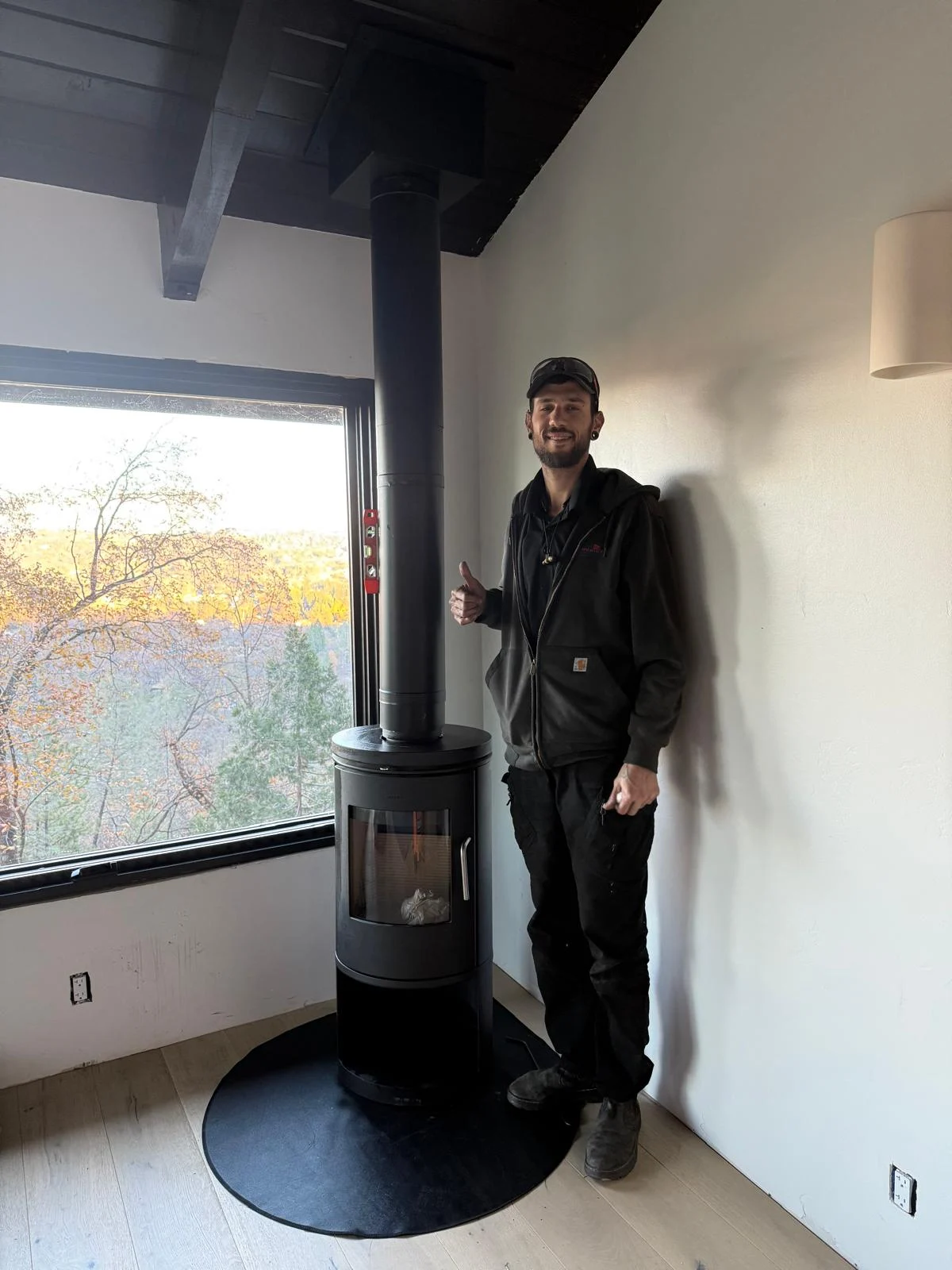
Why won’t my gas fireplace light?
A gas fireplace usually won’t light because of one part: a dead pilot, a weak thermocouple or thermopile, a failed igniter, a stuck gas valve, clogged burner ports, or a blocked vent killing the flame. Check the pilot and the gas valve first. Those two cause more than half the calls I run.
Nine reasons a gas fireplace won’t light
I put together a longer gas fireplace wont light walkthrough with photos of each part, if you want to look one up before you call. Here’s the short version, in the order I actually check it, because checking out of order means paying for a part you didn’t need.
- Pilot light is simply out. Wind through a vent, a draft, a gust the day before. Relight it per the label on the unit. If it stays lit, you’re done and you didn’t need a repair call at all.
- Wall switch or remote batteries are dead. On a switch-operated unit this looks exactly like a broken fireplace and it’s a $4 fix.
- Gas supply valve isn’t fully open. Behind the unit or at the meter. Sounds obvious. I still find this one a few times a year.
- Thermocouple has weakened. This is the small copper rod sitting in the pilot flame. It generates a tiny electrical signal that tells the main gas valve it’s safe to stay open. Weaken that signal and the pilot lights, then dies the second you let go of the knob.
- Thermopile has failed. Same idea as a thermocouple but built to run a wall switch or remote, since it puts out more voltage. Units with switch or remote control almost always run on a thermopile, not a plain thermocouple.
- Igniter has stopped sparking. A piezo or hot-surface igniter clicks or glows but doesn’t produce enough to catch the pilot. You’ll hear the click and see nothing happen.
- Gas valve itself is sticking. Rare, but it happens on an older unit. The pilot lights fine and the valve still won’t open to feed the main burner.
- Burner ports are clogged. Dust, pet hair, and spider webs collect in the ports over an off season and choke the flame down to almost nothing on one side. This is usually a gas fireplace flame too low complaint, not a no-light complaint.
- Venting or draft is blocked. A capped or nested vent pipe, or negative air pressure in the house, can pull the pilot flame right off the thermocouple.
Here’s the one nobody tells homeowners: in a lot of the newer sealed builds out in Roseville and Rocklin, a direct-vent gas fireplace shares combustion air with the rest of the house, and running a bathroom fan or a kitchen hood on the same side of the house can depressurize it enough to blow the pilot off the thermocouple mid-burn. People chase that as a broken part for weeks.
It’s the exhaust fan next door.
Three things to try before you call
You don’t need me for all nine of these.
Relight the pilot exactly per the plate on the unit. If it holds, that’s the whole fix. Next, check that the wall switch or remote has fresh batteries, since a dead battery mimics a dead fireplace down to the last detail. And check the gas shutoff valve behind the unit or at the meter is turned fully to the open position, not partway. Those three catch a real share of the calls that come in sounding urgent.
What doesn’t belong on that try-it-yourself list is anything past the glass. Pulling a thermocouple or opening a gas valve housing isn’t a homeowner project.
What gas fireplace service involves
Once it’s past the three things above, the repair itself is one of five parts: a thermocouple, a thermopile, an igniter, a gas valve, or a blower on units that circulate warm air into the room. All five wear out on their own schedule, and none of them are visible without the fireplace face plate off.
What is a thermocouple, exactly?
It’s a two-metal sensor, a few inches long, sitting right in the pilot flame. Heat from the flame generates a small voltage. That voltage is what holds the safety valve open. No voltage, no gas flow, on purpose. It’s a safety device first and a convenience second, which is why a weak one gets replaced rather than adjusted.
What gas fireplace repair costs
There’s no invented number here. Michael prices six specific jobs from a starting figure, and gas-side appliance repair isn’t one of them, so it’s priced on site after the $59 inspection instead of guessed at over the phone. That’s how the business quotes every job: look first, then give you a real number, not a range with four variables nobody explained.
If the same visit turns up chimney-side work behind the appliance, a cracked crown or a failed cap, repair pricing from Americas Chimney Sweep lays out the confirmed starting numbers for that side of the job.
Call (916) 833-2959, 7am to 7pm, seven days a week, and ask for the $59 inspection. It’s credited to whatever repair follows, so you’re not paying for the visit twice.
Who fixes what, and the line between them
Americas Chimney Sweep is licensed in California, CSLB #1150991, classification C-29 Masonry. That license covers the masonry side of a chimney: crowns, brick, tuckpointing, the structure itself. It doesn’t cover gas fitting.
Split a gas fireplace call down the middle and you get two different trades. Venting is chimney work. Pulling a thermocouple, swapping an igniter, or working inside the valve body is gas-fitting work. Michael does the work himself. The $59 inspection sorts out which side of that line the fireplace is on before anyone opens a panel.
Safety: when to stop and call someone
Most of what’s on this page is a wait-and-diagnose situation. This one isn’t.
If your gas fireplace smells like gas, whether it’s running or off, don’t troubleshoot it. Shut the gas valve if you can reach it without leaning over the appliance. Get everyone out of the house. Call from outside. This isn’t a judgment call, and it isn’t something I’ll walk you through over the phone.
While I’m already at the fireplace
Sometimes a repair call turns into a different conversation entirely. If what’s actually sitting in the firebox is an old grate and you’re tired of dealing with wood, that’s also when people ask about converting, and I can swap the wood grate for a proper log set instead of repairing hardware you’re planning to walk away from anyway. And if the appliance turns out to be a wood stove, not a gas unit, with a cracked or warped body rather than a repairable part, that’s a wood stove installation service call, not a gas repair.
How long a gas fireplace lasts, and how often it needs service
Most gas fireplace repair visits take one to two hours. Hidden venting trouble or a part that must be ordered can turn that into a return visit.
Most gas fireplace parts, the thermocouple, thermopile, and igniter especially, are wear items with a working life measured in years, not decades, since they sit directly in a flame or a spark path every time the unit runs. A yearly look at the pilot assembly and burner ports catches most of this before it turns into a no-light call in December.
Why Sacramento homes run gas
Sacramento Metro AQMD calls no-burn days most winters under its wood-burning program, which is a big part of why so many valley homes converted to gas fireplaces and gas log sets in the first place rather than fighting a burn ban every cold snap. Newer construction out in Roseville, Rocklin, and El Dorado Hills was often built gas-ready from the start, sealed combustion, direct vent, no chimney in the traditional sense at all. Older Midtown and East Sacramento homes went the other way, retrofitting a gas insert or log set into a brick firebox that used to burn wood. Same nine-part checklist either way, different housing behind it.
Proof this holds up
The rating sits at 4.95 across 62 Google reviews, and I reply to every one myself. You can read the verified customer reviews before you decide whether to book.
Service area
Gas fireplace calls come from across the five-county area, and Roseville is a regular stop. Newer builds there run sealed, direct-vent gas units almost exclusively, which is exactly the setup where a depressurized house does the most damage to a pilot light. If you’re out that way, book a slot for Roseville and I’ll bring the same nine-point check I run everywhere else.
Do gas fireplaces need to be cleaned?
Yes, though not the way a wood fireplace does. There’s no creosote, but the burner ports collect dust and the glass panel hazes from trace combustion byproducts over a season of use. A yearly service cleans both and checks the venting at the same time, which matters more than the dust itself.
Is it safe to use a gas fireplace with soot?
No, and soot is the tell. A gas flame burning clean shouldn’t leave any behind, so black marks on the glass or logs usually mean the burner isn’t combusting fully, which can also mean more carbon monoxide than it should produce. Stop using it and get the burner and venting checked first.
Gas fireplace questions, answered
What does gas fireplace repair cost?
There’s no set figure for the gas-side parts themselves. It’s priced on site after the $59 inspection, which is credited to the repair if you go ahead. Chimney-side work behind the appliance, like a cap or crown, does have a starting price, listed on the chimney repair cost page.
What is a thermocouple, and why does it fail?
It’s the small sensor sitting in the pilot flame that tells the main gas valve it’s safe to stay open. It fails from age and from sitting directly in a flame every time the unit runs. A weak one usually shows up as a pilot that lights and then drops out.
How long do gas fireplaces last?
Many gas fireplace units last 10 to 15 years. Use, maintenance, heat exposure, and parts availability can shorten or extend that range.
How often should a gas fireplace be serviced?
Once a year is the general rule, ahead of the season you’ll use it. A yearly check catches a weak thermocouple, clogged burner ports, or a partly blocked vent before any of them turn into a no-light call on the first cold night.
My gas fireplace smells like gas. What do I do?
Stop troubleshooting. Shut the gas valve if you can reach it safely, get out of the house, and call from outside. This isn’t something to diagnose over the phone.
Do you do gas fireplace repair near me in Roseville or the rest of Placer County?
Yes, gas fireplace calls run across the full five-county service area including Roseville and Placer County. The $59 inspection is the same starting point throughout the service area.
If your gas fireplace won’t stay lit, guessing at parts wastes money and time. Pick up the phone, dial (916) 833-2959 any day between 7am and 7pm, and ask for the $59 inspection so you know which of the nine parts is the real problem before anyone touches it. Or schedule a visit online and I’ll call to confirm before I show up.