
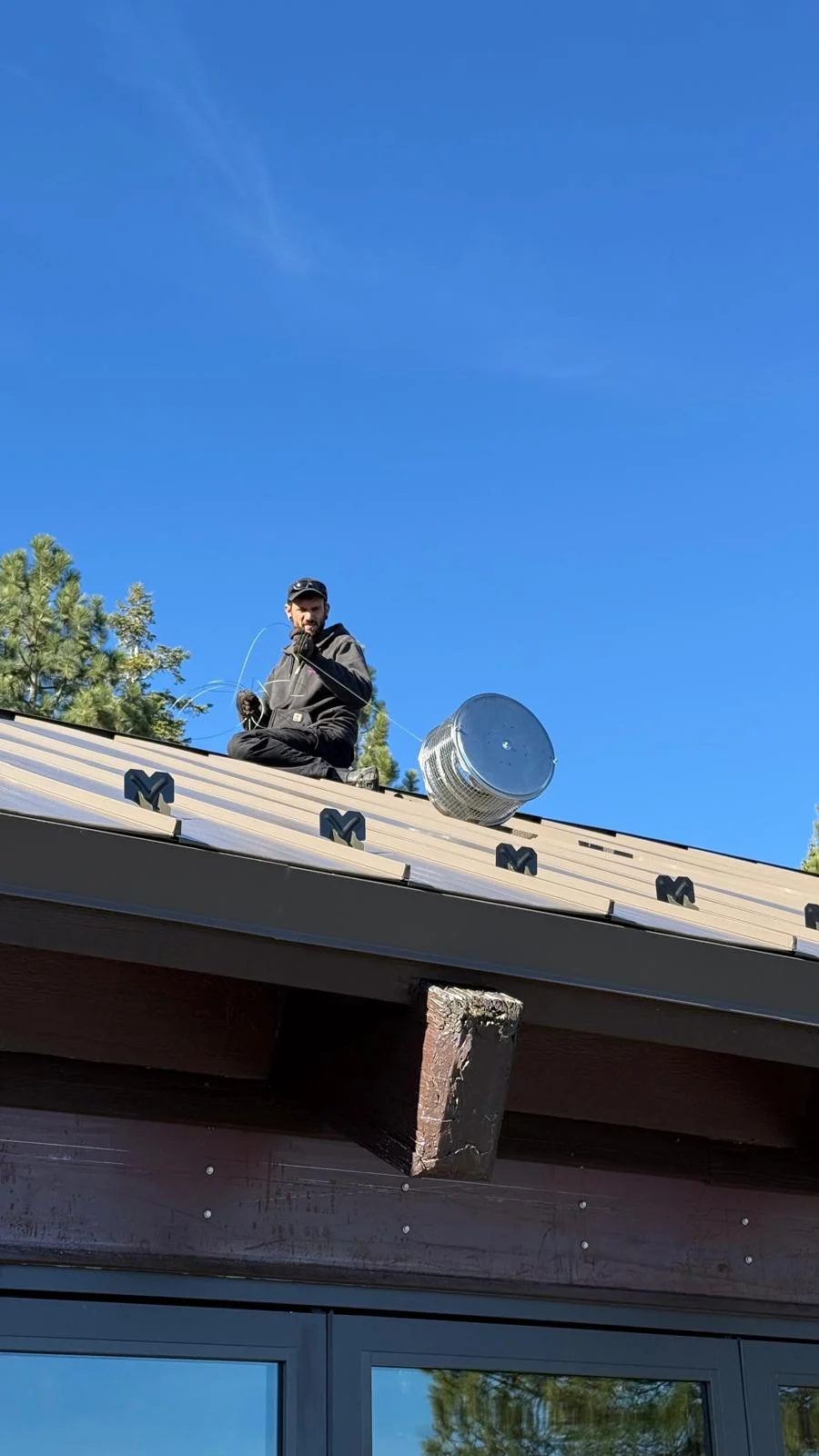
How do you get an animal out of a chimney?
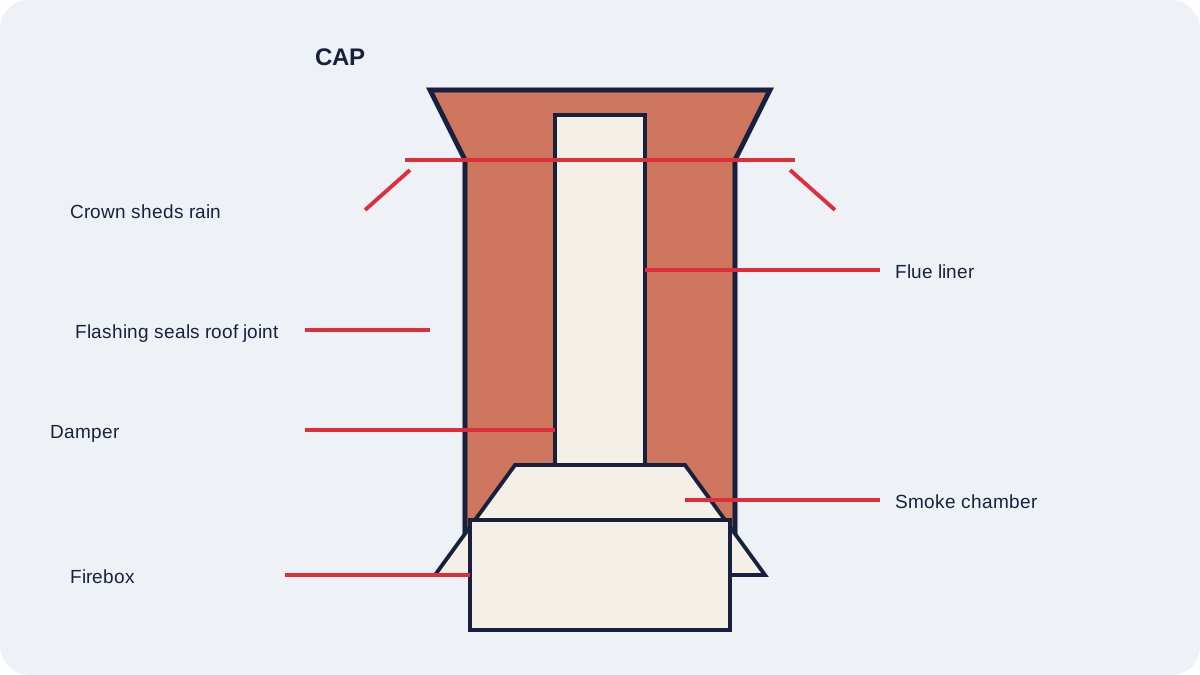
The safe method starts with identifying what’s up there, then fitting a one-way door over the flue opening so it can leave to feed and can’t climb back in. Once it’s confirmed gone, the flue gets a permanent cap. Trapping it, or sealing an active nest first, is illegal in California. It usually makes the problem worse too.
Signs you have an animal in the chimney
An animal in chimney call almost always sounds like one of these five.
| What you’re hearing | What it usually means | What it turns into |
|---|---|---|
| Scratching or thumping right after dusk | A raccoon in chimney, denning until spring | Exclusion once it leaves to forage, then a cap |
| Chirping in chimney at dawn, quiet by mid-morning | A bird nesting on the flue wall itself | Wait it out if there are chicks, then cap once they fledge |
| Fast scratching high in the flue, worse in early fall | A squirrel in chimney scouting a den before the cold sets in | One-way exclusion, then a cap before it tries again |
| A smell that builds over days, no sound at all | A bird stuck in chimney that didn’t make it out, or nesting debris blocking the damper | Retrieval, then a cleaning to clear what’s left |
| Fluttering only at dusk, nothing during the day | A bat roosting, not nesting | Exclusion timed to when the colony is out feeding, then a cap |
The legal way to remove an animal from a chimney
There is a legal way and an illegal way to get an animal out of a chimney in California. Most wildlife-removal ads skip past that part. You can’t trap it and drive it across town. If it’s a bird sitting on eggs or young that can’t fly yet, the law doesn’t let you disturb that nest until they’ve left on their own.
Chimney swift removal is the clearest example. Swifts are a protected migratory species. Pulling an active nest with chicks inside is against the law. The same rule covers most birds in chimney removal calls, and most bat colonies too.
So chimney animal removal that’s actually legal works the same way almost every time. A one-way door goes over the flue opening, the animal leaves to feed or fly out at dusk, and the door keeps it from getting back in. Once it’s confirmed gone, the flue gets cleared out and capped for good. Chimney nest removal isn’t finished until that last step happens. Skip the cap and you’ve paid to solve the problem for one season.
Here’s what I see most on these calls: the animal rarely gets in through a cap that’s obviously missing. It gets in through one whose mesh has gone soft with rust, wide enough for a squirrel’s skull but not broken in any way you’d notice from the ground.
Michael does the work himself. The $59 inspection sets the scope before anything starts.
What animal removal from chimney costs
Every animal call starts with the $59 inspection, same as every other service. A raccoon in chimney denning behind the smoke shelf is a different job than one bird that flew in and can’t find its way out. Michael prices from what he sees. Not a guess. That $59 folds into the job if you go ahead, and it’s the only charge for the visit if it doesn’t.
The exclusion work itself is priced on site after the inspection. There’s no invented range up front. It moves with how deep the animal is and whether nest material has to come out too. The cap is different. Chimney cap installation, the fix that keeps this from happening again, starts at $350.
If debris has packed the flue enough to need clearing, that’s a basic chimney cleaning. It starts at $199. Bird nest removal cost usually lands closer to the cleaning side than the cap side. For the rest of the list, chimney sweep prices covers every starting number in one place.
Call (916) 833-2959, 7am to 7pm, seven days a week. Ask for the $59 inspection. If it turns into exclusion work and a cap, that $59 comes off the total either way.
How I get the animal out
- I confirm what’s up there with a light and a listen before opening the damper. Opening it blind can drop something straight into your living room.
- I fit a one-way exclusion device over the flue opening, so whatever’s inside can leave to feed but can’t climb back in.
- I let it work. One-way devices usually stay in place for at least three to five days, and longer through bad weather.
- I confirm the flue is empty with a light and a second look, not an assumption because the noise stopped.
- I clear out nest material blocking the damper or sitting on the smoke shelf.
- I cap it, sized to that flue, so the same thing doesn’t happen again next winter.
When you don’t need animal removal service
Not every noise is an animal. A single scratching sound during a windstorm, followed by silence, is usually a branch or loose flashing, and if it doesn’t repeat within a day or two, it probably was never there.
Check the damper before you panic. If it’s closed and seated properly, whatever’s above it can’t reach the house. That’s not an emergency that needs an after-hours call.
The exception is a smell that keeps getting worse, or scratching that’s steady for days. That means something’s settled in, and it’s worth the $59 inspection to find out what.
While I’m up there
Nesting material above the damper usually leaves more behind than just a smell. If the flue underneath is also coated in hardened buildup from years of burning before anyone noticed the animal, I can get the hardened buildup chemically broken down on the same visit. A wood stove pipe might have backed up while the flue was occupied. If so, I can have the stove pipe pulled and cleaned properly too.
Why Sacramento-area foothill chimneys draw wildlife
Nevada City, Grass Valley, and the rest of the foothill towns burn wood as primary heat, not ambiance, and a flue sitting warm and unused all summer looks exactly like a den to anything scouting winter shelter. Sacramento’s rain runs roughly November through April, and a raccoon or squirrel that moves in during the dry months is usually settled in before the first storm hits and the chimney gets lit again.
Also serving Rocklin
Animal calls come in from across the five-county service area, and Rocklin is a regular stop. Newer construction there tends to run sealed gas appliances with shorter flue runs, and a cap with soft mesh is just as much an open door as an uncapped chimney. Rocklin is inside the service area, along with the rest of the counties running out from Nevada City.
Proof this holds up
“I told Michael we found a dead bird when we first opened the fireplace after summer, and he checked everything thoroughly. He cleaned the chimney properly and even noticed we were missing a spark arrestor and took care of that for us.”
The rating sits at 4.95 across 62 Google reviews, and Michael replies to every one himself. Read what Sacramento homeowners say after the job is done before you decide whether to book.
Animal removal from chimney questions, answered
Is it legal to remove an animal from a chimney yourself in California?
Not always. Trapping and relocating an animal, or disturbing an active nest with eggs or young inside, can be illegal depending on the species. A one-way exclusion device that lets it leave on its own is the method that stays on the right side of that line.
Do you handle bat removal chimney calls?
Bats carry strict rules around exclusion timing, since a colony can include young too small to fly. Michael does the work himself.
What is chimney swift removal, and why can’t it happen right away?
Swifts are a federally protected migratory bird, and an active nest with eggs or chicks can’t legally be removed until the young have fledged. The honest answer on a swift call is often to wait a few weeks, then cap it once the nest is empty.
How much does bird nest removal cost?
It starts with the $59 inspection. Past that, it’s priced on site. Michael sees how deep the nest sits and whether it’s blocking the damper first. Most bird nest jobs land closer to the basic chimney cleaning price, from $199, than the cap installation price.
Is there animal removal from chimney near me available tonight?
Hours run 7am to 7pm. Seven days a week. If the damper’s closed, it usually isn’t an emergency that needs to happen tonight anyway.
Book the inspection
A scratching sound doesn’t fix itself. Waiting usually means more nest material, not less. Call (916) 833-2959, 7am to 7pm seven days, and ask for the $59 inspection so you know what’s actually in the flue first. Or pick your own appointment slot in about sixty seconds and Michael will call to confirm.
Michael owns Americas Chimney Sweep and handles every animal call himself, from the inspection to the cap that finishes the job.