

Why does a chimney get white stains?
White staining on a chimney is almost always efflorescence. Mineral salts, mostly calcium carbonate, dissolve inside the brick as water passes through it, then get left behind on the surface once the water evaporates. It means water is moving through the masonry. It doesn’t mean the brick is failing, at least not yet.
If the staining comes back every wet season, the water finding its way in is worth tracking down, and the seven places a chimney leaks and how each is found is the place to start looking. Left alone long enough, that same water is often what turns into when spalling brick means repointing and when it means rebuilding, which is a bigger job than anyone wants. Catching it early through brick chimney sealing is almost always the cheaper path.
New mortar or a recent repoint
This is the most common cause, by far. It’s also the least worrying. Fresh mortar holds a lot of water while it cures. For the first year or two, some of that water works its way to the surface and leaves salt behind as it dries. You’ll usually see it on a chimney under three years old, or right where recent repair work was done.
Confirm it with a dry hand. Brush the stain with a stiff dry brush, no water. If most of it comes off as a light powder, and the brick underneath looks sound, that’s curing salts working themselves out.
Fine to leave alone. Or brush it off yourself.
A cracked or open chimney crown
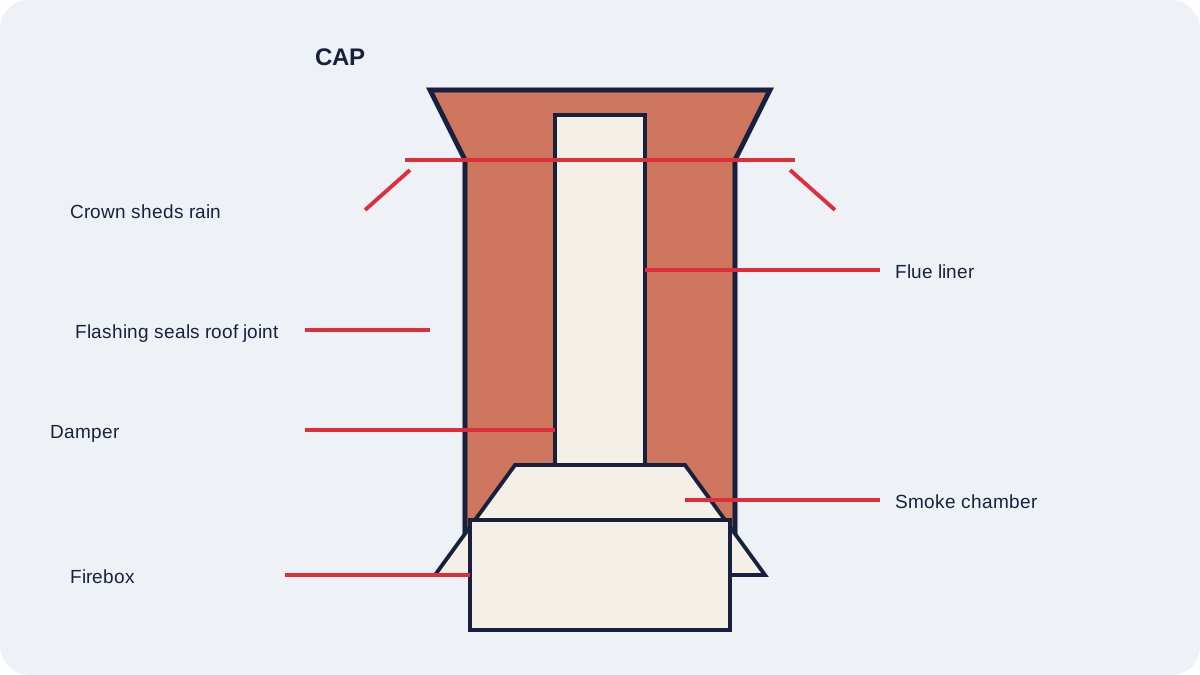
The crown is the concrete cap poured over the top of the masonry. It’s built to shed water away from the flue and off the sides. A hairline crack across it lets rain sit and soak straight down into the brick below, and efflorescence shows up as a stripe running down from wherever the crack sits.
This one doesn’t fix itself.
You can often spot a crack from the ground with binoculars on a sunny day. Confirming how deep it runs, and whether it’s still sound enough to patch, takes someone on the roof. Not a ladder-and-a-look job.
A missing, undersized, or rusted-through cap
A chimney cap keeps rain out of the flue itself. Without one, or with one that’s rusted through, water runs straight down the inside of the flue liner and soaks into the surrounding brick from the inside out. That’s why this staining sometimes shows up lower on the stack than you’d expect. Look up the flue with a flashlight from the firebox. Daylight, or an obvious gap where metal should be, is your answer.
Condensation inside an oversized or unlined flue
Less common, but it happens. Mostly on older masonry chimneys built wider than the appliance connected to them actually needs. Combustion gases cool faster than they should on the way up, moisture condenses on the inside of the flue, and it works its way back out through the brick. Harder to confirm from outside. Usually needs a camera inspection to rule the others out first.
Is it just cosmetic, or is it a warning sign?
Efflorescence itself is cosmetic. It’s the water behind it that decides whether you have a problem. A light, powdery stain on brick that’s under a year or two old, that brushes off clean and doesn’t come back heavy the next rain, is nothing to spend money on.
Leave it alone.
What changes the answer is repetition and company. Staining that returns thick after every storm, spreads further down the stack each season, or shows up next to soft, crumbling mortar or brick flaking off in chips, isn’t curing salts anymore. That’s water on a schedule, and it’s doing damage on the same schedule.
Scrubbing efflorescence off with a wire brush and a hose before it’s finished curing doesn’t solve anything. It pulls the salt right back up to the surface, and it comes back heavier after the next rain. You’re not fixing it. You’re just restarting the clock.
Sacramento’s rain arrives in one long stretch, roughly November through April, then stops almost completely for the rest of the year. Brick that’s been baking dry in an attic since June soaks up that first real storm fast, so a lot of the efflorescence calls I’d expect come in December and January, right after the valley’s first hard rain of the season.
While a tech is up on the roof looking at staining, it’s worth asking about anything else nagging at you. A lot of the same dry summer that bakes out your masonry is also behind smoke smell in ductwork after a rough fire season, and if it’s been a while since anyone’s looked, it’s a fine time to also ask how often a chimney needs cleaning.
When to stop guessing and call someone
Look closer yourself when the staining is light, the brick underneath is solid, and the masonry is a couple of years old or newer. That’s a five-minute check with a dry brush. Not a service call.
Stop guessing when the mortar joints feel soft to a fingernail, when brick is chipping or popping off in flakes near the stain, or when the staining lines up with a water mark on a ceiling or in the attic below. That combination means water has moved past cosmetic and into structural. It’s not a DIY afternoon. A crown or flashing repair done wrong from the ground just moves the leak somewhere else on the roof.
Michael, the tech who covers Sacramento, can usually tell curing salts from an active leak just from where the stain sits and how it feels underneath. What he can’t do from a photo is see the crown, the flashing, or the inside of the flue.
If the stains keep coming back, or something underneath them feels soft, the $59 chimney inspection is the fastest way to get an honest answer instead of another guess. It comes off the price of the job if you decide to go ahead. Call (916) 833-2959, 7am to 7pm, seven days, and ask for it by name.