
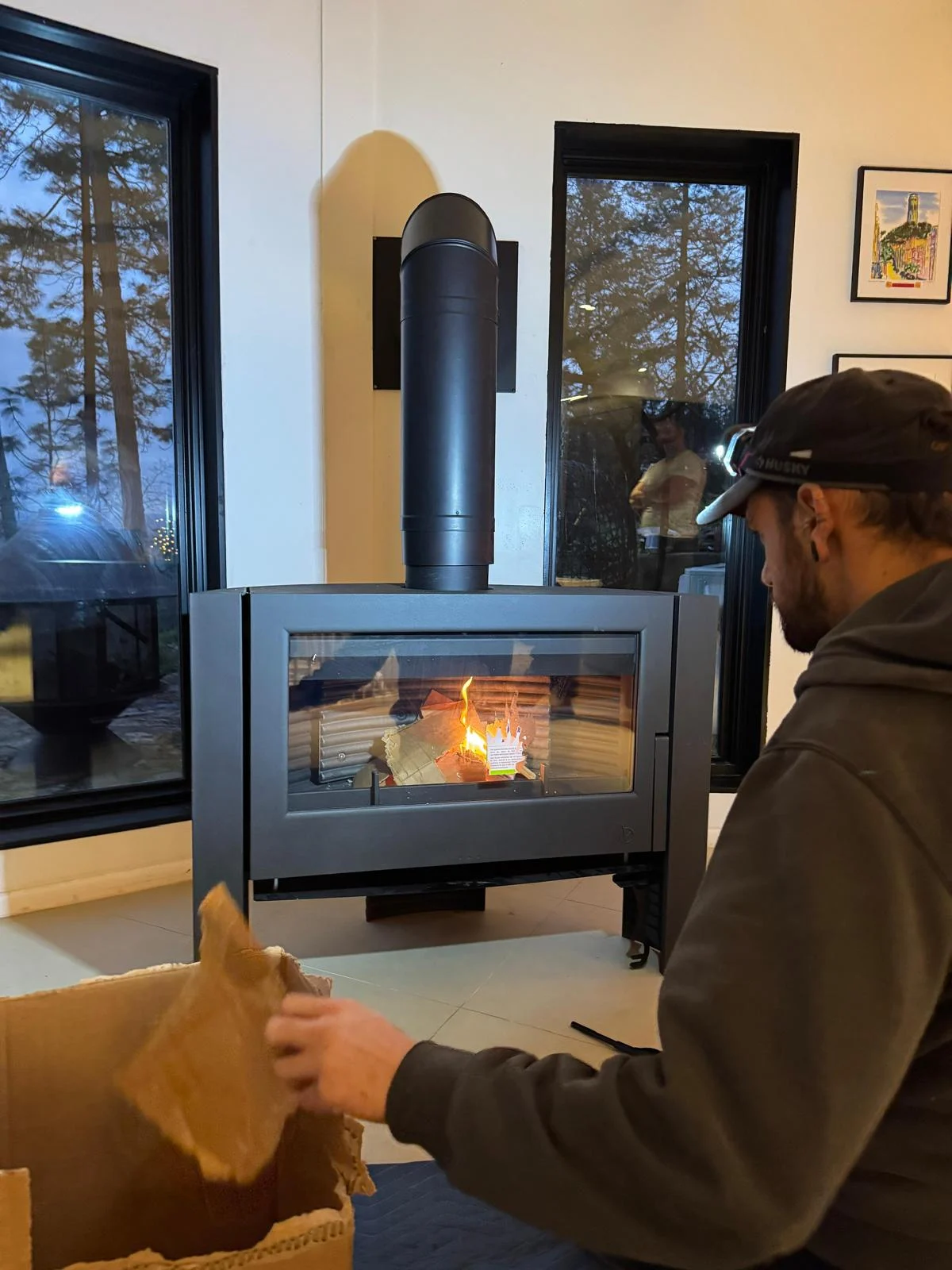
The fuel is the part people notice first. The build is what decides what a fireplace needs, and most homeowners have never been told which of the five they own.
If any of this points to a repair you’re already suspecting, a fireplace repair service visit is the fastest way to find out what’s actually wrong instead of guessing from the internet.
The five fireplace types you’ll find in a Sacramento home
How a fireplace is built decides how it vents and how it fails. Before you look at cost or upkeep, it helps to see the five side by side.
| Type | What it burns | How it vents | What it needs, roughly |
|---|---|---|---|
| Wood-burning masonry | Wood | Brick or block chimney, open flue | Annual inspection, sweep when creosote builds, occasional crown or cap work |
| Wood-burning prefab (zero-clearance) | Wood | Metal chase with a factory-built flue | Same inspection and sweep cycle, different repair parts |
| Wood stove or pellet insert | Wood or compressed pellets | Stovepipe run through the existing flue | Annual inspection and cleaning of the stovepipe and liner |
| Gas fireplace | Natural gas or propane | Direct vent, B-vent, or no vent at all | Annual inspection of the burner area and vent termination |
| Electric fireplace | Electricity | None. There’s no flame and no flue | Nothing chimney-related, ever |
You can usually tell which one you’ve got without opening anything up. Knock on the wall around the firebox. Solid and heavy means masonry, and a hollow metal sound means prefab. A stovepipe running up through an existing opening means an insert. A glass panel with a switch or remote and no visible flue at all means gas or electric, and the fastest way to tell those two apart is whether there’s an actual flame.
Wood-burning fireplaces: masonry vs. prefab
A masonry fireplace is built from brick or block, one course at a time. It has a firebox, a smoke chamber, and a flue lined in clay tile or a metal liner. It’s built on site. It’s part of the house’s structure.
A prefab, or zero-clearance, fireplace is a factory-made metal firebox dropped into a wood-framed chase and vented through a double-wall metal flue. It looks like masonry from the living room. It is not.
In 1960s tract housing across Carmichael, Citrus Heights, and Arden-Arcade, the fireplace is almost always prefab, not masonry, even though the brick facing around it fools people every time. Most homeowners never find out until something breaks. A masonry crown gets rebuilt. A prefab chase cover gets replaced. Servicing one like it’s the other either wastes money or misses the actual problem.
Both types burn wood, and both build creosote the same way: cool, smoky fires glaze the flue faster than hot, clean ones. Wood that’s still wet burns cooler and smokier no matter which fireplace it’s in. That’s why the firewood moisture guide matters as much as the fireplace type itself.
And both are exposed to the same weather. A cracked crown or a gap in prefab flashing lets rain in the same way, which is where most homeowners first notice trouble, and how to stop chimney water damage covers what that looks like before it gets expensive.
Wood stove and pellet inserts
An insert is a sealed firebox that slides into an existing masonry opening or a prefab firebox. A stainless liner runs the stove’s flue up through the old chimney. Wood inserts burn logs, the same as a wood stove, and you feed and damp them by hand.
Pellet inserts burn compressed wood pellets fed automatically from a hopper by an auger, which is why they hold a steady, even burn overnight in a way a hand-fed wood stove never quite does. The trade-off is that a pellet stove needs electricity to run its auger and blower, so it goes dark in a power outage unless it’s on a battery backup. A wood stove never needs one.
Installing one right isn’t about the stove. It’s mostly about clearance and airflow. NFPA 211, the national standard for chimneys, fireplaces, vents, and solid fuel-burning appliances, sets the minimum clearance-to-combustibles and hearth-pad sizing that any solid-fuel install has to meet. It’s what a rushed installation skips first. If you’re weighing an insert, clearances, hearth pads and permits for a wood stove install is worth reading before you buy the stove, not after.
Once it’s in, an insert still needs attention. It gets the same annual look a wood-burning fireplace does. The stovepipe and liner collect creosote the same way an open flue does, sometimes faster because the burn runs longer. If you’re already set on one, insert installation by Americas Chimney Sweep covers what that visit involves for a wood or pellet insert.
Electric vs gas fireplace: what’s actually different
An electric fireplace runs a heating element and an LED flame effect behind glass. It has no combustion, no fuel line, and no flue anywhere in the unit. A gas fireplace burns natural gas or propane through a real flame. Depending on how it’s vented, it either pulls combustion air from outside the house or draws it from the room.
That difference is bigger than it sounds. Gas still needs a working vent path and a clean burner to run safely. That’s the same category of upkeep a wood fireplace needs, just without creosote in the mix. Electric needs none of it, because there’s nothing to vent.
What is a direct vent fireplace?
A direct vent fireplace is a sealed gas unit with a glass front that draws combustion air from outside through one pipe and exhausts through a second, so no room air is used and no chimney is required. It can vent through a sidewall or straight up through the roof.
The other two common gas setups work differently. A B-vent fireplace pulls combustion air from the room and exhausts through a metal vent, closer to how a water heater vents. A vent-free gas fireplace burns without any exterior vent at all. That’s why building codes in some areas restrict where it can be installed.
Michael does the work himself. The $59 inspection sets the scope before anything starts.
What each type actually costs to run
Wood is the cheapest fuel if you’re sourcing your own, and the most expensive in labor if you’re not, since someone has to split it, stack it, and haul ash out all winter. Gas runs on your utility bill and costs whatever your current rate is per therm. There’s no labor at all beyond flipping a switch or striking a match.
Electric costs the most per hour of actual heat, since you’re paying for resistance heating at your electric rate, but it’s the cheapest thing on this list to install and the only one with zero venting cost. Pellets sit in the middle: you’re buying fuel by the bag, and the stove needs power to run its auger and blower. That power need means pellets aren’t fuel-free the way a wood fireplace can be.
What each type costs to service
Every visit starts the same way, no matter which type you have. A $59 inspection comes first. It tells you what’s going on before anyone touches your fireplace. That $59 comes off the price of the job if you go ahead with the work. It’s the only charge if you don’t.
| Fireplace type | Inspection | Cleaning | Structural repair |
|---|---|---|---|
| Wood-burning masonry | $59 | from $199 | Cap from $350, crown from $350 |
| Wood-burning prefab | $59 | from $199 | Priced on site |
| Wood stove or pellet insert | $59 | from $199 | Priced on site |
| Gas fireplace | $59 | Priced on site | Priced on site |
| Electric fireplace | Not applicable | Not applicable | Not applicable |
Anything past those six starting prices, a liner, a rebuild, a gas-side repair, gets priced on site once the inspection shows what’s needed. That’s not a placeholder for a number we didn’t want to publish. It’s how the pricing works here: one starting price for the common jobs, and an on-site number for everything the situation decides.
What I see on inspection calls: homeowners who just bought a house almost never know which of the five types they have. The most common surprise is the “brick” fireplace in a 1960s or ’70s tract home that turns out to be a prefab metal firebox behind a brick veneer. It changes the whole plan. You can’t rebuild a crown that doesn’t exist, and a chase cover replacement is a different job than tuckpointing.
When you don’t need chimney service at all
If you have an electric fireplace, you don’t need any of this. There’s no flue, no venting, no creosote, and nothing to inspect on a chimney level. The only maintenance is whatever the manufacturer says about the heating element and the light.
A sealed gas fireplace that’s rarely used, especially a direct vent unit in a newer Roseville, Rocklin, or El Dorado Hills home, doesn’t need annual attention the way a daily wood-burner does. An inspection every couple of years to check the vent termination and the glass seal is usually enough. There’s no creosote building up behind a clean gas flame.
And if you burn four or five wood fires a winter with dry, seasoned wood, you likely don’t need a sweep every year either. Get it inspected annually, that part’s cheap and fast, and sweep it when the inspection shows buildup worth clearing.
Regulations that change what you can even burn
Sacramento Metro AQMD runs a mandatory Check Before You Burn program each winter under Rule 421. The program can restrict wood-burning fireplace and wood stove use on high-pollution forecast days. It applies to wood only. Gas, pellet, and electric fireplaces aren’t affected. That’s part of why the valley has pushed toward gas inserts and gas log conversions over the last decade.
Wood stoves sold new in the US have also had to meet EPA emissions certification since 1988, which is why a stove bought today runs cleaner, with less smoke per hour, than one installed in a house from the 1970s. If you’re replacing an old, uncertified stove, that’s worth knowing before you decide what to put back in its place.
What is a B-vent fireplace?
It’s a gas fireplace that draws room air for combustion and vents exhaust up through a vertical metal flue, the same basic principle as a water heater. A direct vent unit is different, sealed, and pulls combustion air from outside instead of the room. Both skip the tall masonry flue a wood fireplace needs.
What’s the most efficient type of fireplace?
A sealed gas insert or a low-emission wood or pellet insert beats every other option, since the closed firebox keeps room-heated air from getting pulled up the flue and lost. An open masonry fireplace is the other extreme, most of its heat leaves with the smoke. Electric falls in between, no combustion loss at all.
Questions before you decide
What are the main kinds of fireplaces?
Five: wood-burning masonry, wood-burning prefab (zero-clearance), wood stove or pellet inserts, gas, and electric. The fuel tells you how it burns. The build tells you how it’s serviced, and those two things don’t always match what the fireplace looks like from the living room.
How do I know if my fireplace is masonry or prefab?
Check the firebox walls. Masonry is brick or block. It’s several inches thick and feels solid. Prefab is a thin metal panel, often with a manufacturer’s data plate riveted somewhere inside the firebox. If you can’t tell, a $59 inspection settles it in a few minutes.
Is a gas fireplace cheaper to run than a wood one?
It depends what you count. Gas costs whatever your utility rate is per hour of use, with zero labor. Wood is close to free if you cut and split it yourself, but costs real time every week it’s your heat source. Neither is cheaper in every situation.
Do electric fireplaces ever need an inspection?
No, not a chimney inspection. There’s no flue, no combustion. Nothing for a sweep to clean. Any maintenance on an electric fireplace is electrical or cosmetic, not chimney work.
What’s a vent-free gas fireplace?
A gas fireplace that burns without any exterior vent, relying on room air for combustion and exhaust. Some jurisdictions limit where they can be installed, so check local code before buying one rather than after it’s in the wall.
Can I convert a wood-burning fireplace to gas?
Often, yes: either a gas log set in the existing firebox or a full gas insert. What’s possible depends on the flue, the chase, and local code. Michael does the work himself. Gas conversion still sits outside C-29 masonry licensing.
What’s the difference between a wood stove and a fireplace insert?
A wood stove stands freestanding on its own hearth pad, usually vented straight up through the ceiling and roof. An insert is built to slide into an opening that already exists, a masonry firebox or a prefab one. It vents through the existing chimney. Same fire, different install.
Does a gas fireplace need a chimney?
Not always. A direct vent gas fireplace only needs a small pipe through a wall or roof, not a full chimney. A B-vent unit needs a vertical vent. That’s similar to how a water heater vents. Only a wood-burning fireplace needs the tall, full-size flue most people picture when they hear the word chimney.
Whichever of these five you’ve got, the $59 inspection is the same starting point. It comes off the price of the job if you go ahead with the work. Call (916) 833-2959, 7am to 7pm seven days, and ask for it by name.
Michael owns Americas Chimney Sweep and runs every inspection himself, on every type listed here. His profile page introduces the tech who covers Sacramento before he’s ever at your fireplace.