
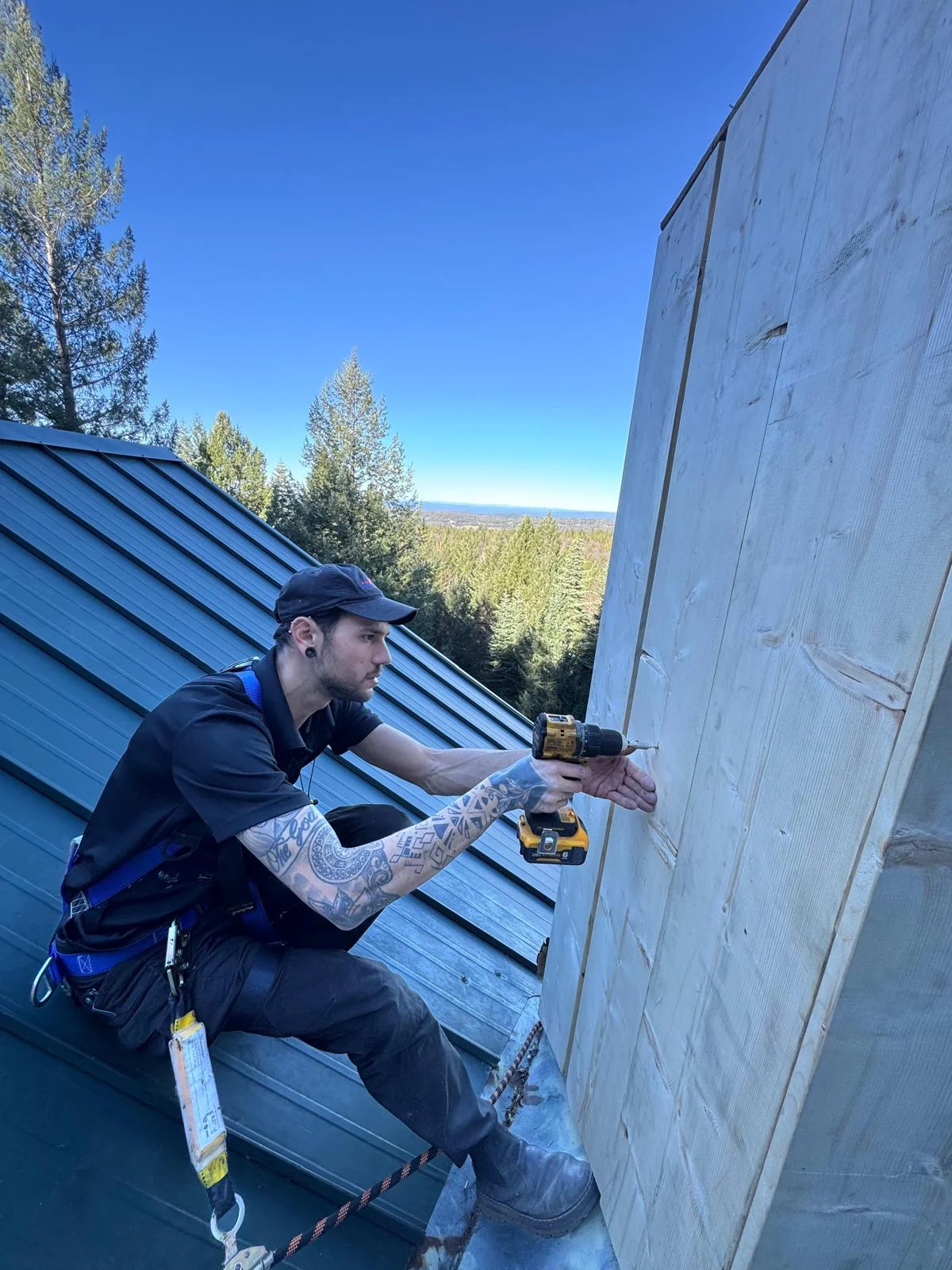
Most of it traces back to one of five spots: a cracked crown, a missing cap, flashing that’s pulled away at the roofline, brick that’s never been sealed, or gutters dumping extra water right at the base. Catch any one of those before the rain starts and you’ve handled most of the job. Five spots. That’s the whole list.
This page is about catching those five things early, while a look and a ladder still solve it. If you’re already past that and something’s actively leaking, here’s where the fixes live: a stain centered over the firebox usually means cracked chimney crown repair, water tracking in from the roofline is chimney leak repair in Sacramento, and brick that’s gone chalky and started soaking up rain needs why vapour-permeable sealer and never a paint-on coating, not anything off a hardware store shelf.
The five causes of chimney water damage, and which ones you can check yourself
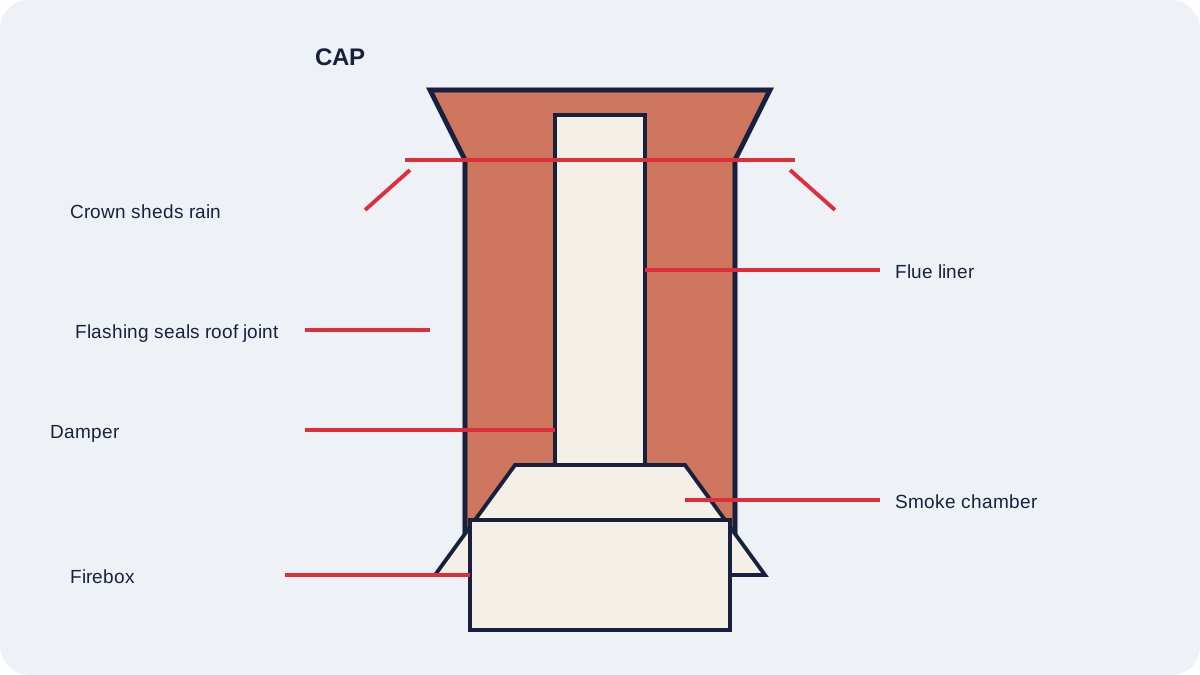
I’ve climbed enough roofs after a bad winter to see these five show up in close to the same order every time. Here’s the list, with an honest note on which ones you can rule out without calling anyone.
| What’s letting water in | What you’ll see | Whose job it is |
|---|---|---|
| A cracked or too-thin crown | A stain centered right over the firebox, worse after every storm | Not DIY, needs someone on the roof |
| A missing or damaged cap | Water dripping straight into the firebox during a storm, no ceiling stain yet | Sometimes DIY on a low, easy roof; skip it on a steep pitch |
| Flashing pulling away at the roofline | A stain running along one side, tracking down with the slope | Not DIY, roofline work tied into the shingles |
| Porous, unsealed brick | Chalky white staining spreading across the face | DIY to spot, not DIY to fix |
| Clogged gutters or a downspout aimed at the chimney | No stain yet, just standing water pooling at the base after storms | Fully DIY, a ladder, a hose, and ten minutes |
The crown fails first more often than anything else on that list, and it’s rarely a bad repair job. It’s usually poured too thin against the flue tile the day the house went up, with no room for that tile to expand when a fire heats it. Every fire after that pushes a little harder on the same hairline crack, and every freeze that follows works water deeper into it. The crack doesn’t announce itself. By the time a stain shows up on the ceiling, it has usually been open for months.
Brick behaves differently.
It’s porous by design, meant to take on a little moisture and let it back out as the weather changes. Unsealed brick sitting through five months of Sacramento rain does what any dry sponge left in a puddle does. It soaks in and stays wet until a freeze traps the water inside.
That’s the mechanism behind the chalky white staining called efflorescence. Efflorescence isn’t the problem itself. It’s proof of what’s already happening underneath, and the wall is wet on the inside long before it looks dirty on the surface.
Caps and flashing fail for a simpler reason.
Metal wears out. A cap left too long rusts through at the seams, or a critter finally pries the mesh loose, and now the top of the flue is open to every storm that rolls through. Flashing works the same way in reverse: it’s not glued to the roof, it’s woven into it, and once a seam pulls loose or old caulk finally cracks, water runs under the shingles instead of over them.
Neither failure looks dramatic from the ground. Both let in a steady trickle for months before anyone notices.
The gutter check almost nobody thinks to make
Here’s the pattern I see more than any other, and it’s the one homeowners never expect: a downspout that empties two feet from the base of the chimney, or a gutter that’s clogged and overflowing right where the roof meets the flashing. That’s not rain falling on the chimney the way it’s supposed to. That’s a garden hose pointed at the one seam in the whole system that was never built to handle a steady stream. A gutter that backs up every storm turns a light rain into a small waterfall aimed right at that seam.
I’ve traced more “mystery” leaks back to a backed-up gutter than to a bad crown. It’s not glamorous work. Clear it, redirect the downspout a few feet, and that one’s done for the season.
Two things people mistake for the real thing
Not every mark means trouble. Soot streaks from a smoky fire wash off with a hose and don’t come back until the next bad burn. Real efflorescence is different. That one’s easy to rule out. It comes back in the same raised, crusty pattern after every rain, whether you’ve hosed it off or not.
A damp smell in the fall isn’t always a leak either. Cold flue air meeting warm house air causes that more often than water does. Check the brick first. If it’s dry to the touch and the smell fades once you’ve had a few fires going, that one usually isn’t water at all.
What you can check from the ground, and when to stop and call someone
None of this takes more than ten minutes, and none of it puts you on the roof. Look at the brick face for chalky white staining. Check the ceiling under the chimney after the next real storm, not just today. Then check the downspout. If it empties within a couple feet of the chimney base, that’s worth fixing before anything else on this list.
If it all comes back clean, you’re done for the season without ever touching a ladder. Get a normal inspection whenever you’re already having other work done, not because a blog post published in September told you it’s time.
Here’s where I’d stop and hand it off instead of finishing it yourself: anything that puts you on the roof itself, not just a ladder against the gutter. A crown or a cap sits on a slope you weren’t trained to walk. A slip up there costs more than any repair bill would. The same goes for flashing tied into the shingles. If you’re not sure whether what you’re looking at is water damage or a sign the flue tile itself needs a closer look, that’s a call, not a guess from the ground.
Water damage on a chimney turns into a bigger conversation more often than people expect. If you’re getting the house ready to sell, active staining is one of the first things a home inspector flags, and it’s worth learning to handle it before it kills the deal. And if you already know something’s off but aren’t sure how thorough a look it needs, that really comes down to which inspection level your situation calls for. A flashlight check from the firebox and a camera running the length of the flue are not the same visit.
Why this list matters more here than in a dry climate
Sacramento gets almost all its rain in about five months and none in the other seven. Brick spends the winter soaking that up and the summer baking it back out, and that cycle alone would be manageable on its own.
What actually breaks the brick down is what happens on the nights in between. Valley lows in winter sit right around freezing, and water trapped in a crack expands as it turns to ice. Do that a few dozen times in one winter, and a hairline crack that was fine in October is a real leak by February. That’s the whole cycle, playing out one winter at a time.
Who’s actually checking your chimney
The same person who traces a stain back to its source is also the one who answers the phone. There’s no dispatcher. There’s no second technician either, and you can look up the person before they arrive. The rating sits at 4.95 across 62 Google reviews, and I reply to every one of them myself.
What actually prevents chimney water damage?
A cap that keeps rain out of the flue, a crown without cracks, and flashing sealed tight where the chimney meets the roof. Those three stop most of it before it starts. Add gutters clear enough to shed water away from the chase, then catch anything smaller with the $59 inspection before wet season hits.
Book the $59 inspection if something didn’t check out clean
If you went through the five things above and something didn’t check out clean, the $59 inspection covers the same ground either way: crown, cap, flashing, or brick. One visit answers it. It comes off the price of the job if you go ahead, so you’re really only paying for the answer if you don’t. Call (916) 833-2959, 7am to 7pm, seven days a week, and get it looked at before the rain in November finds it for you.