NFPA 211 is the fire-safety standard, published by the National Fire Protection Association, that governs how chimneys, fireplaces, and vents get inspected. It doesn’t name one inspection type. It sets three levels, Level 1 through Level 3, and which one applies depends on what happened to the chimney, not how old it is.
What does the standard require every year?
NFPA 211 calls for a chimney, fireplace, or vent to be inspected once a year, whether or not it got much use. Sweeping, repairs, or cleaning happen only if the inspection turns something up. The standard doesn’t demand an annual sweep. It demands an annual look.
That distinction gets lost constantly. Homeowners hear “inspected annually” and assume it means “swept annually,” so they either pay for cleaning they didn’t need or skip the year because the fireplace “isn’t dirty.” NFPA 211 doesn’t ask what the flue looks like from the hearth. It asks whether someone with training has looked at the whole system since it last burned.
What’s the difference between a Level 1, Level 2, and Level 3 inspection?
Level 1 covers what a technician can see without tools: the readily accessible parts of the chimney interior and exterior, the connection to the appliance, and basic clearances. It’s the routine, nothing-has-changed check, and it’s what a standard chimney inspection in Sacramento is built around.
Level 2 adds a video scan down the flue and a look at whatever’s reachable in the attic, basement, or crawlspace. NFPA 211 calls for it any time something has changed: the house is being sold, the fuel type or appliance is different, the flue was relined or is getting chimney relining, there’s been a chimney fire, or an event like an earthquake or a bad storm may have moved something inside the flue that nobody can see from the firebox. Americas Chimney Sweep runs level 2 inspections by Americas Chimney Sweep with the camera included in the visit, not billed on as a surprise afterward.
Level 3 is the rare one. It isn’t routine. It means removing part of the building or chimney structure to reach a hazard that Level 1 or 2 already flagged but couldn’t fully confirm. If a Level 2 report says “possible void behind the firebox wall,” Level 3 is what settles it.
| Level | What it checks | When NFPA 211 calls for it |
|---|---|---|
| Level 1 | Readily accessible flue, firebox, and appliance connection | Routine annual inspection, nothing has changed |
| Level 2 | Everything in Level 1, plus a video scan of the flue and accessible attic, basement, or crawlspace areas | Property sale, appliance or fuel change, relining, a chimney fire, or a weather or seismic event |
| Level 3 | Everything in Level 2, plus removal of building or chimney components to reach a suspected hidden hazard | Level 1 or 2 found something that can’t be confirmed without opening the structure |
Which level does your chimney need?
For most homeowners burning the same fireplace they burned last year, Level 1 is the whole answer. Nothing in NFPA 211 asks for more. Level 2 only enters the picture when something changed: a sale, a new insert, a reline, a fire, or a storm that could have shifted a flue tile you can’t see from the hearth.
That last trigger matters more here than people expect. Sacramento’s wet season runs roughly November through April, and the rest of the year is dry enough that masonry bakes hard between storms. A chimney that took a real soaking during an atmospheric river, or froze hard the night after, is exactly the kind of event NFPA 211 has in mind for Level 2, even if nothing looks wrong from the ground.
Field note: what a Level 2 camera finds
Most of the calls asking about NFPA 211 by name come after a home sale, when a lender or a buyer’s inspector requires the Level 2 report before closing. What turns up on those runs is rarely dramatic. It’s a hairline crack in a flue tile from years of freeze-thaw, or a section of liner pulled half an inch loose at a joint, invisible from the firebox and easy to miss without a camera. NFPA 211 exists so it gets caught before it’s a chimney fire instead of after.
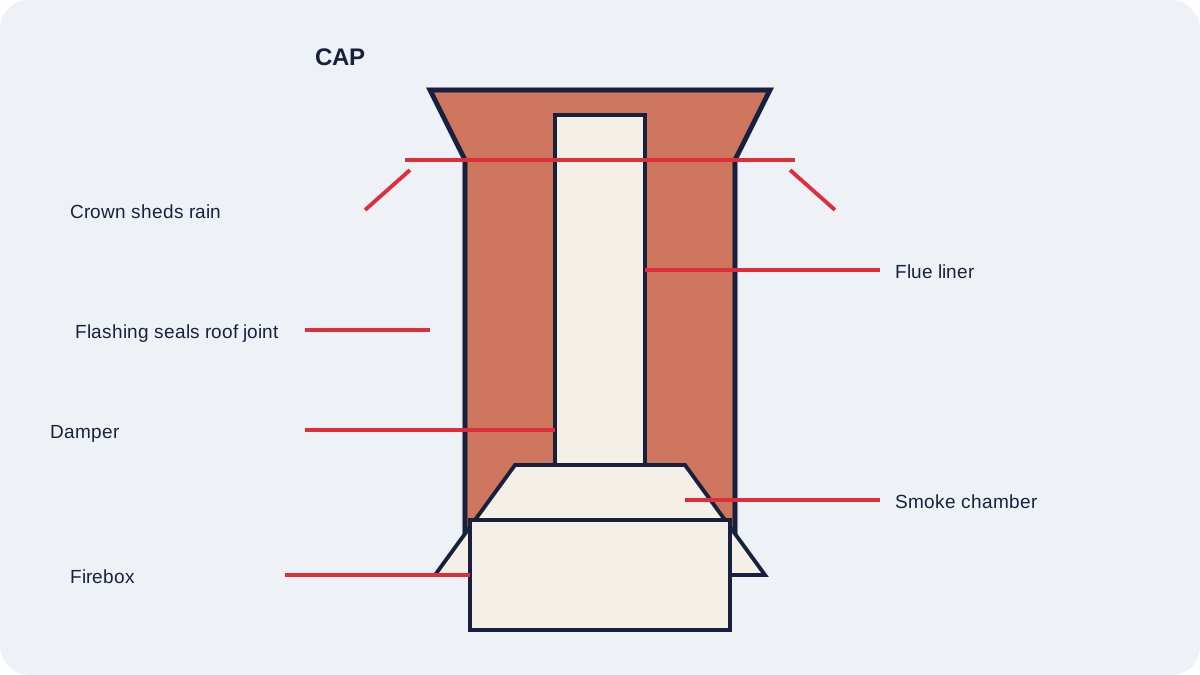
While a Level 2 tech is already on the roof with a camera, it’s worth knowing what’s being looked at. The crown, the flashing, the spark arrestor, the smoke chamber, and the flue tiles all sit in different places and fail in different ways. The chimney parts diagram breaks down where each one sits, which helps when a report comes back naming a part you’ve never heard of.
What shows up in a written report?
A Level 2 report isn’t a pass-or-fail slip. It’s a record. It’s usually what a lender, insurer, or title company wants, and a complete one covers:
- The condition of the flue liner, section by section, including any cracks, gaps, or separated joints the camera found.
- The creosote or glaze level on the interior walls, and whether it needs cleaning before the chimney is used again.
- Structural notes on the crown, cap, flashing, and chase, since a Level 2 covers the exterior along with the interior.
- Clearance to combustible material, checked wherever the chimney passes through a wall, ceiling, or roofline.
- Photos or video stills tied to each finding, not just a written description of what someone thought they saw.
That last item is what separates a real report from a form letter. Anyone can write “flue appears sound.” That line proves nothing. A report with stills attached is the one a lender or a buyer’s agent will accept without follow-up questions.
Does the standard apply to gas fireplaces and inserts too?
NFPA 211’s title covers chimneys, fireplaces, vents, and solid-fuel-burning appliances. Gas venting isn’t the main focus, and the inspection levels are built mostly around solid-fuel systems. That doesn’t let gas off the hook. A gas vent still collects lint, spiders, and blocked terminations. Gas does not mean maintenance-free. Michael does the work himself.
Is it the law, or just a recommendation?
NFPA 211 is a voluntary consensus standard, not a statute. Nobody gets a ticket for skipping it. But it’s the standard most fire departments, insurers, and mortgage lenders point to when they ask for proof a chimney was inspected, which is why it shows up in real estate paperwork more than in any code enforcement letter.
The three-level system isn’t something any one company invented. It’s written into the standard itself, and inspection reports across the industry use the same three tiers.
When you don’t need a Level 2 inspection this year
If nothing has changed since last year, same appliance, same fuel, no sale in progress, no chimney fire, no major storm or quake nearby, a Level 1 inspection satisfies NFPA 211 on its own. You don’t need the camera run every year just because the term exists.
That’s it.
The standard is written around events, not calendars. A ten-year-old chimney that’s been swept and inspected annually, burning the same way it always has, doesn’t need Level 2 just because a decade passed. Level 2 exists for the year something actually happened.
Save it for that year.
Does homeowner’s insurance require this inspection?
Not automatically. But many carriers ask for a Level 2 report before renewing a policy on an older home, or after a claim involving fire, smoke, or a wood-burning appliance. The insurer sets its own trigger. NFPA 211 just supplies the format the report gets written in.
How long does a Level 2 inspection take?
Longer than a Level 1. The camera has to run the full length of the flue, and every bend slows it down. A single straight flue on a single-story roof moves faster than multiple flues on a steep two-story roof. The tech can give you a real window once they’ve seen the chimney, not before.
What it costs to have this checked
There’s no invented range here. A Level 1 check is priced as a standard inspection, and Americas Chimney Sweep starts that at $59, deductible against the job if you go ahead with anything the inspection finds, and charged only if you don’t. Level 2, with the camera scan, runs from there depending on what needs a closer look. Anything past a standard inspection gets priced on site once a tech has eyes on the chimney, never guessed at over the phone.
If you’ve got an NFPA 211 line in an inspection report and aren’t sure which level it’s asking for, call (916) 833-2959, 7am to 7pm, seven days a week, and ask the licensed tech who does the work to walk through what your specific report means before you pay for anything.