
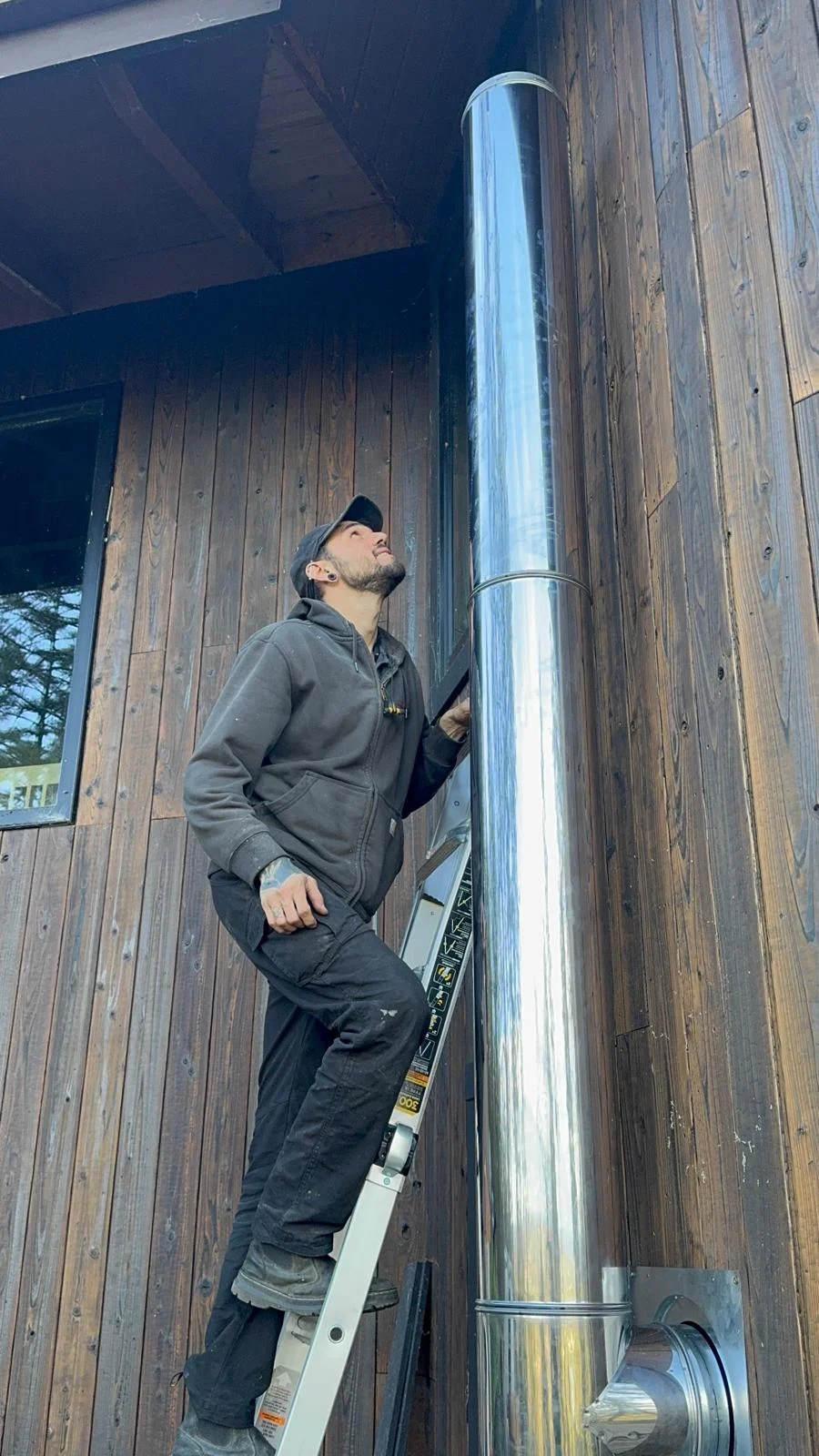
This page walks all nine, in the order I actually check them on a service call, with photos of what each one looks like from the outside. If you’d rather skip ahead to hiring it out, that checklist is also the nine reasons a gas fireplace will not light. If the complaint is more soot and smell than a dead pilot, what gets cleaned on a gas fireplace and why it still matters covers that side instead. Both fall under Americas Chimney Sweep fireplace work, and Michael runs the same order on every call, whether it’s a no-light complaint or routine upkeep.
Three you can fix yourself, right now
Start here. These three cause more no-light calls than the other six combined, and none of them require opening the unit.
Relight the pilot exactly the way the plate on the unit tells you to. A gust from a door left open, a draft down the flue on a windy night, or nothing at all. Pilots go out on their own sometimes.
If it holds, you’re done.
Check the batteries in the wall switch or remote. A dead battery mimics a dead fireplace down to the last detail. The switch clicks, nothing happens, and most people assume the worst before they assume the cheap thing.
Find the gas shutoff valve, usually behind the unit or at the meter, and confirm it’s turned fully open, not partway. I still find this one closed a few times a year, almost always after someone else was working nearby.
When it’s not actually broken at all
A gas line that’s sat unused since last spring has air in it, not just gas, and that air has to purge out before the pilot will catch. On a fireplace that’s been off all summer, holding the pilot knob in and clicking the igniter three, four, even six times before it lights is normal, not a sign anything’s wrong. Give it a real thirty seconds each try before you give up on it.
The same goes for a first-season smell. A faint dusty or metallic odor for the first ten or fifteen minutes of the season’s first fire is dust burning off the burner and logs, not a gas leak. It fades on its own and doesn’t come back on the second fire. A smell that lingers past that first burn, or shows up cold with the unit off, is a different situation entirely. That one belongs in the safety section below, not this one.
The six that usually need a second pair of hands
Past this point, the fix is inside the unit, and pulling a thermocouple or opening a gas valve housing isn’t a homeowner project. The six below are what’s failing, laid out so you can tell them apart before you pay for the wrong part.
A weak thermocouple. This is the small copper rod sitting right in the pilot flame. Heat off that flame generates a tiny voltage, and that voltage is the only thing telling the main gas valve it’s safe to stay open. Weaken the signal and the pilot lights, then dies the second you let go of the knob. It’s a cheap part, but reaching it usually means pulling the pilot assembly, not something to start on with the fireplace still installed.
A failed thermopile. Same job as a thermocouple, built to put out more voltage so it can run a wall switch or remote instead of a knob you hold in. If your unit has a switch or a remote, it’s almost certainly running a thermopile, not a plain thermocouple. Confirm it the same way: pilot lights, holds while a technician’s meter shows voltage on the pilot circuit, then drops when the main valve is asked to open.
A dead igniter. A piezo or hot-surface igniter clicks or glows but doesn’t put out enough to catch the pilot. You’ll hear the click. You just won’t see anything happen after it. This one’s a straight swap once it’s confirmed, but confirming it means testing spark or surface temperature with the panel off.
A gas valve that’s sticking. Rare, and mostly on an older unit. The pilot lights fine and stays lit, and the valve still won’t open far enough to feed the main burner. It’s the one cause on this list that can’t be told apart from a bad thermocouple without opening the valve body, which is why it’s the last thing checked, not the first.
Clogged burner ports. Dust, pet hair, and spider webs settle into the ports over an unused season and choke the flame down until it barely shows. This usually reads as a weak, uneven flame rather than a true no-light, but a bad enough clog smothers the pilot too. A quick look with a flashlight tells you which ports are dark instead of blue, though clearing them without disturbing the gas orifice behind them takes a steady hand.
Blocked venting or a negative draft. A capped or nested vent pipe outside, or negative air pressure inside the house, can pull the pilot flame right off the thermocouple. This is the one that’s actually chimney work, not gas work, and it’s the reason the venting side and the appliance side of a gas fireplace call are two different jobs.
The cause almost nobody expects
Some fireplaces use electronic ignition instead of a standing pilot: no small flame burning all the time, just a switch or remote that lights it fresh each use. If yours is one of them, that system needs continuous household power to run its safety circuit. Kill the power and the fireplace goes dark, even though nothing on it actually broke.
That catches people hardest in the foothill towns, where a wind event or a utility outage can cut power for a day at a time. That’s exactly when a gas fireplace is what people want running. It looks broken. It isn’t: it’s waiting on the grid.
If you’ve worked through the list above and the pilot still won’t hold, that’s the point where the nine reasons a gas fireplace will not light becomes a repair call instead of a troubleshooting session. That page runs the same order, just with a technician and the panel off. It’s part of Americas Chimney Sweep fireplace work. And if the flame’s fine but the glass is hazy or the burner smells dusty the first time it kicks on for the season, what gets cleaned on a gas fireplace and why it still matters is the page for that instead.
While you’re in troubleshooting mode, two related problems are worth knowing about even if neither is what’s happening to you right now. A lot of older gas conversions sit inside the original masonry chimney, cap and flue tile included, and water is what actually destroys chimneys long before the gas appliance inside one usually fails. A cracked crown above a gas insert leaks straight down onto parts that were never built to get wet. And if the house runs a mixed system, gas in one room and wood in another, it’s worth knowing what to do during a chimney fire on the wood side. A gas no-light call and a wood chimney emergency get handled in completely different ways.
A gas fireplace call splits into two trades, and knowing who does the work and what he is licensed for matters before anyone opens a panel. Americas Chimney Sweep is licensed in California, CSLB #1150991, classification C-29 Masonry. That license covers the chimney and venting side of the causes above: the cap, the flue, the draft, and whether the vent pipe is clear. Michael is the only technician who shows up to a job, so there’s no dispatcher sending someone whose name you never heard on the phone.
The C-29 license doesn’t cover gas fitting: the thermocouple, thermopile, igniter, and valve work on the other six causes. Michael does the work himself. That’s sorted out before anyone touches a panel, not after.
When to stop, no matter what
Everything above is a diagnose-it-yourself situation, or close to one. This isn’t.
If your gas fireplace smells like gas, whether it’s running, off, or you’re not sure, stop. Don’t relight it. Don’t check the ports. Don’t work through anything on this list.
Shut the gas valve if you can reach it without leaning over the appliance, get everyone out of the house, and call from outside.
That’s not troubleshooting anymore. That’s a leak.
For everything else on this list, the fix is knowing which of the nine you’ve actually got before you buy a part. Call (916) 833-2959, any day from 7am to 7pm, and ask for the $59 inspection. It’s deductible against the repair if you go ahead, so you’re not paying twice to find out what’s wrong and then fix it.