
What is chimney flashing?
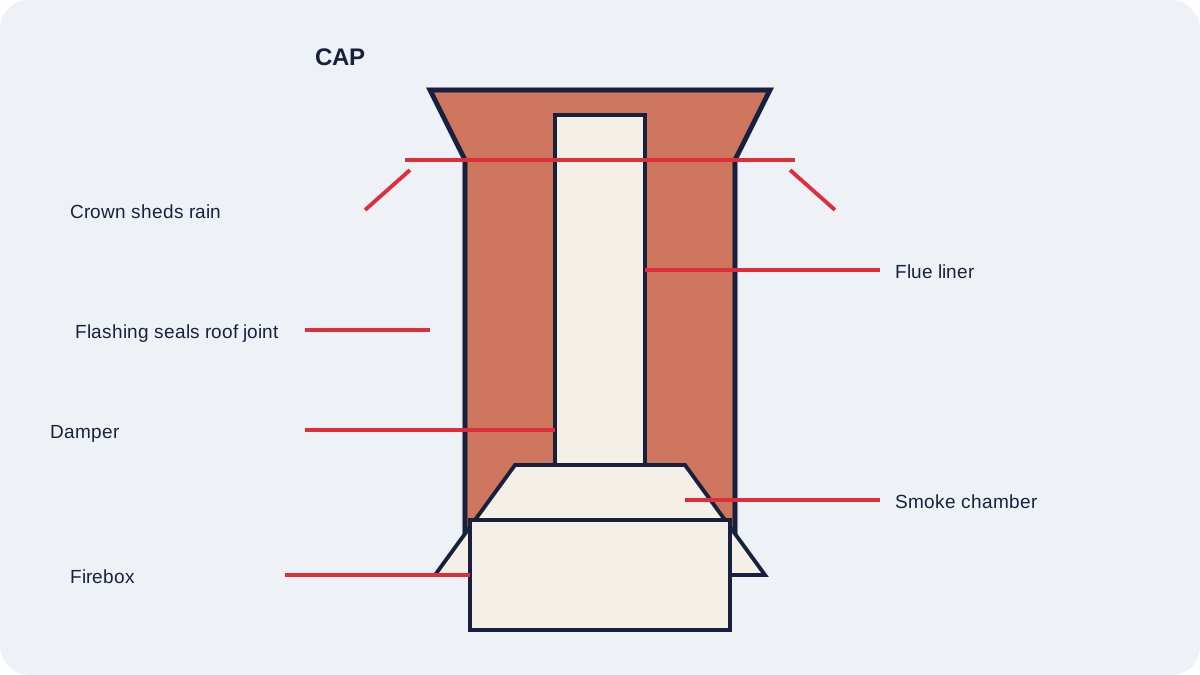
Chimney flashing is the strip of metal that seals the gap where the chimney passes through the roof. Usually that means L-shaped step pieces on the sides and a straight apron piece up front. It stops rainwater from running down the brick and into the house at that joint. When it fails, water gets in right there.
Flashing leak or crown leak? Here’s how to tell
Homeowners usually blame the crown first. That’s the part they can see from the ground. But a stain that runs along one side of the chimney, following the slope of the roof, is almost always flashing. A stain centered directly under the chimney, one that showed up slowly over a few seasons, points to the crown instead.
Here’s the part that trips people up. Water rarely drips straight down from where the flashing actually failed.
It runs under the shingles along the roof deck first, and comes out lower, sometimes a foot or two past the real gap. I’ve had homeowners stand under a ceiling stain pointing straight up, certain that’s the spot. The actual opening in the flashing is over on the far side of the chimney.
Caulk is a tell on its own. See a bead of it smeared along the flashing edge, cracked or peeling? That’s not a repair. It’s a patch somebody already tried. It buys a season before the water finds the same gap it always does.
Step flashing vs. one-piece flashing
A properly built system uses step flashing. Individual L-shaped pieces, one per shingle course, get woven into the roofing as it goes up, plus a counter-flashing piece folded into the mortar joint on the chimney side. Water hits it and sheds down and off, course by course, the same way the shingles shed water on their own.
A lot of the tract houses built through Carmichael and Citrus Heights in the 1960s skipped that step. One piece of flat flashing gets caulked to the brick instead of woven into the roofing. It fails at the same spot every time: right where the caulk meets the masonry, where the two materials expand and contract at different rates all year. Chimney flashing repair on a house built that way usually means converting it to step flashing, not patching the same joint again.
What chimney flashing repair costs
There’s no flat number for this one. I’d rather tell you that than make one up. A resealed section of step flashing on a single-story roof and a full re-flash around a two-story chase aren’t close to the same job. So chimney repair cost in Sacramento for flashing work gets priced after I’ve actually seen the roof, the pitch, and how much of the run has failed.
What I can tell you up front: the visit that gets you that number is the same $59 inspection I run for everything else. Call (916) 833-2959 and ask for it, 7am to 7pm, seven days a week, and you’ll have a real price before anything gets scheduled. If a call isn’t convenient, online booking puts the same $59 visit on the calendar.
How I fix a failing flashing
- I get on the roof and trace the water path from the stain back to the actual gap, which is often not the spot you’d guess.
- I check whether the system was step-flashed to begin with, or whether it’s a single caulked piece that was never built right.
- If the step flashing is sound and only a seam or the counter-flashing has opened up, I reseat and reseal that section.
- If the flashing is rusted through, undersized, or was never step-flashed, that’s a chimney flashing replacement: pulling the old metal and roofing it back in correctly, course by course.
- I check the crown and the mortar joint above the flashing line at the same time, because a crack up there can mimic a flashing leak from inside the house.
When you don’t need a full flashing replacement
Not every flashing problem means tearing the whole run out. If the step flashing itself is solid and it’s just the counter-flashing seam or one corner that opened up, resealing that section holds for years. I’d rather reseat six inches of flashing than sell you a full re-flash you don’t need yet.
The exception is anything caulked instead of step-flashed. That’s not a system that’s aging. It was never built to last. Resealing it again just buys another season of the same leak.
While I’m up there
Flashing rarely fails alone. If the stain has been there a while, I’ll also track down where the water is actually getting in, in case more than one spot is contributing. I’ll check whether the brick face itself is taking on water too, which is a job for chimney waterproofing service rather than the flashing. Catching both on the same visit saves a second trip up the same ladder.
Why Sacramento flashing fails on schedule
Sacramento gets almost all its rain between November and April and none the rest of the year. Flashing metal sits dry and hot all summer, then goes through five straight months of wet, cold nights. Valley lows in winter hover right around freezing. That swing between bone-dry and soaked is exactly what works a caulked seam loose faster than it would in a milder climate.
What other homeowners found
The rating sits at 4.95 across 62 Google reviews. I’ve replied to every one myself. One customer put it simply: “The owner was incredibly prompt, professional, and highly communicative.” Read more of them on our review page before you book.
Chimney flashing repair near me
I cover five counties out from Nevada City: Nevada, Placer, El Dorado, Sacramento, and Yolo. A search for chimney flashing repair near me from most of the valley or the foothills reaches the same one technician either way. If the inspection turns up buildup along with the flashing problem, that’s often paired on the same visit with chimney cleaning Sacramento CA homeowners already have booked for the season.
Flashing repair questions, answered
What actually counts as a flashing repair?
Reseating and resealing the metal where the chimney meets the roof, or replacing step flashing that was never installed correctly. Caulking over the visible gap isn’t a repair. It’s a temporary patch that buys a season before the same leak comes back.
How much does chimney flashing repair cost?
There’s no set price. A small reseal and a full re-flash around a chase aren’t the same job. It’s priced on site after the $59 inspection. That $59 comes off the total if you go ahead with the repair.
What does it cost to replace chimney flashing?
Full replacement costs more than a reseal. It means pulling shingles back and reinstalling step flashing correctly, course by course. The exact number depends on the roof pitch and how much of the run has to come out, so I price it after seeing it rather than guessing.
How long does the repair take?
A small flashing repair may take a few hours. Full replacement often takes half a day to a day, depending on roof access and how much surrounding material must come up.
Can I just caulk the flashing myself instead of replacing it?
You can. It will probably hold through one storm. Caulk isn’t flashing, though. It’s a patch over a gap that a properly step-flashed system doesn’t need in the first place. It buys time, not a fix.
How long does chimney flashing last?
Real step flashing, tucked under the shingles course by course, holds up as long as the roof itself, often twenty years or more. It’s usually the sealant or mortar at the counter-flashing joint that gives out first, well before the metal itself corrodes through. That’s the part that actually needs rechecking every few years.
Should a roofer or a chimney company fix your flashing?
A chimney company, in most cases. Flashing sits at the seam between two trades, and that’s exactly where diagnosis gets botched. A roofer who rarely touches chimneys will often just caulk the gap and move on, when it actually needs to tie into the crown and brick correctly, not just the shingles.
Get the leak found before the next storm
A flashing leak doesn’t heal itself over a Sacramento winter. By the time the ceiling stain is obvious, the water’s usually been getting in for a while. Call (916) 833-2959 and ask for the $59 inspection, available 7am to 7pm, seven days a week. You’ll know whether it’s flashing, the crown, or both before you spend anything else. Or start with online booking and I’ll call to confirm the details.