
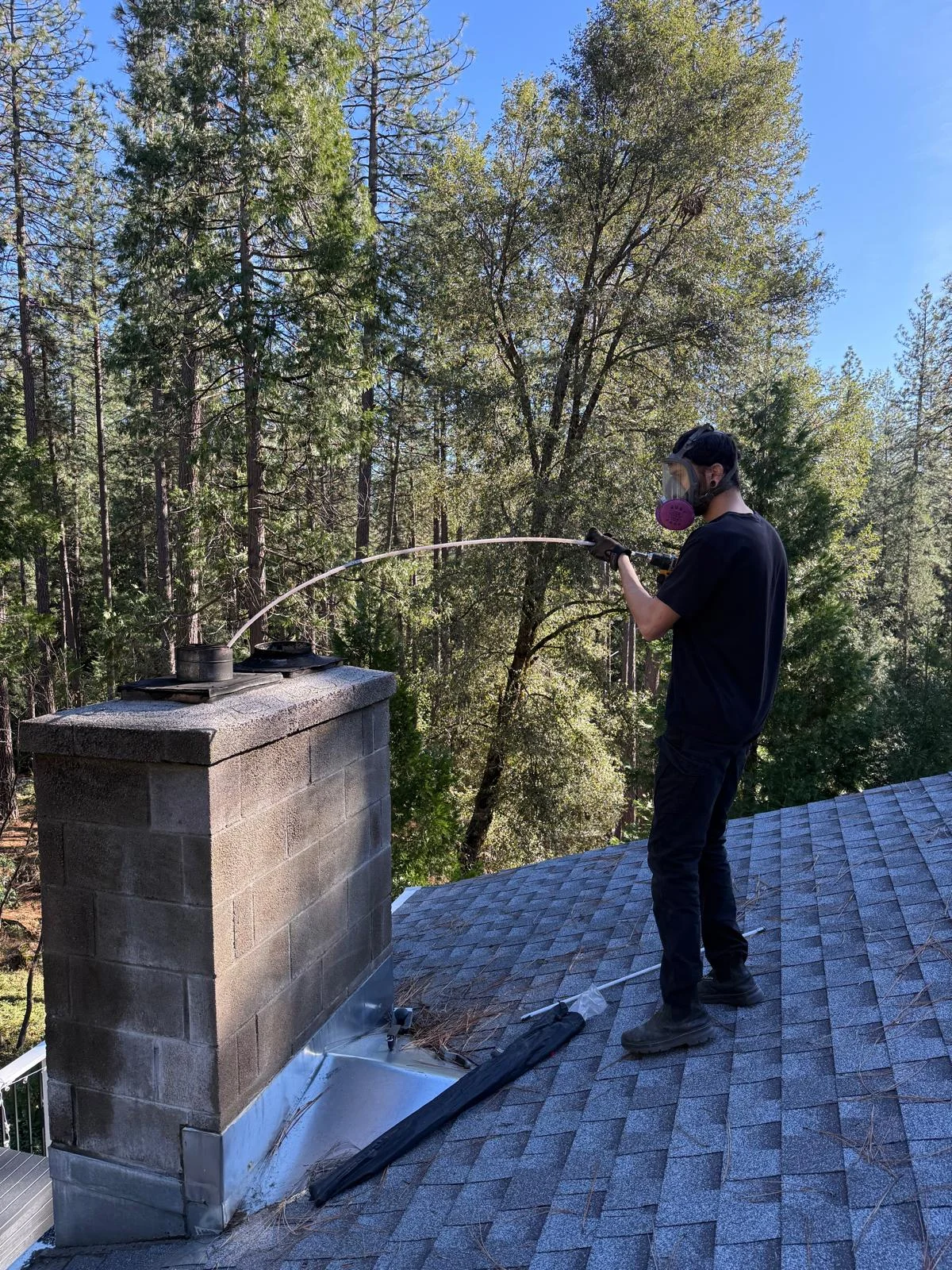
This page covers both. It also shows where gas logs fit inside every fireplace service we offer, from inserts to gas logs. Call (916) 833-2959, 7am to 7pm every day, and ask for the $59 inspection of your firebox and flue. It’s credited to the job. So finding out what your setup needs costs nothing extra if you move forward.
Vented vs ventless gas logs
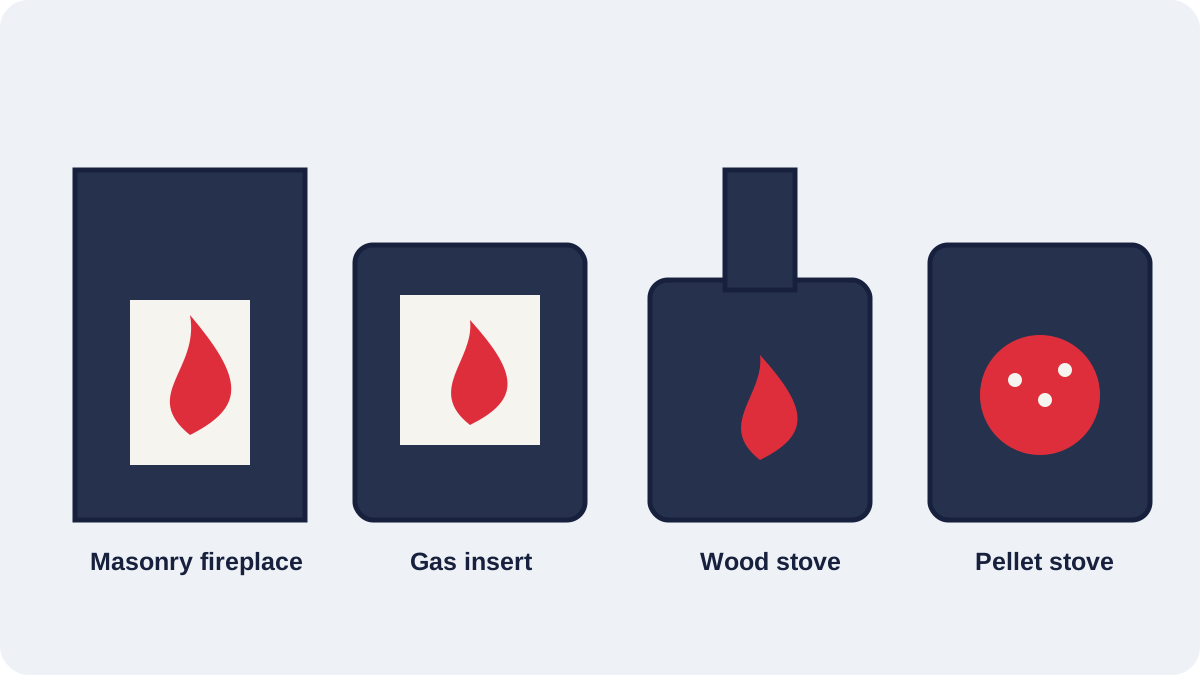
Vented gas logs burn through your existing flue. The flame runs taller and more yellow, closer to a real wood fire, because the chimney carries the exhaust away. Ventless gas logs vent nothing outside at all. They burn cleaner and bluer, and they depend on a sensor that shuts the gas off if the room’s air runs short.
Ventless doesn’t mean odorless, and it doesn’t mean nothing enters the room. It means everything the fire produces, heat, moisture, and combustion byproducts, stays inside the house instead of going up the chimney.
In an older, drafty place that’s rarely a problem, because the house leaks enough air to dilute it. A newer subdivision out toward Rocklin or El Dorado Hills is sealed tight for efficiency, and that same log set can trip its own oxygen depletion sensor on a cold night with everything closed up. I get called out to “fix” a log set that’s doing exactly what it’s supposed to do. That’s not a defect. That’s the sensor doing its job.
- Vented gas logs need a flue that’s clear and correctly sized, nothing cracked or blocked inside, so a stuck damper or a failed liner has to get fixed before the logs go in, not after.
- Ventless gas logs skip the flue entirely, which is why they’re popular in fireboxes with a damaged or missing chimney, but they still need enough air volume in the room for the sensor to work as intended.
- Vented sets run at a lower efficiency because a lot of the heat goes up the flue with the exhaust, same as it always did with wood.
- Ventless sets keep almost all of that heat in the room, which is the whole appeal, and also the reason moisture and combustion byproducts stay in the room too.
How a gas log job happens
A gas log job touches two systems. California licenses them separately. The opening, damper, and flue are masonry work. The gas line, shutoff valve, and burner connection are gas fitting. Michael does the work himself.
What doesn’t change is the first step. Here’s what the $59 inspection actually checks:
- Is the flue intact and clear enough to carry exhaust from a vented set, or does it need liner or damper work first?
- Does the log grate fit the firebox opening, since a set sized for a smaller fireplace burns unevenly and looks wrong in a larger one?
- Is there enough clearance around the mantel and surround for the heat this particular set puts out?
- Is a gas line already run to the fireplace, or does that piece still need to happen first?
- For a ventless set, is the room’s air volume large enough for the oxygen sensor to work the way it’s designed to?
What converting a fireplace to gas costs
There’s no single figure for the cost to convert fireplace to gas, and this isn’t one of the six jobs with a posted starting price. It isn’t that kind of job. Michael only gives a starting number over the phone for jobs simple enough to quote that way. The flue condition, the gas line situation, and which log set fits the opening change the number too much for a phone guess to mean anything. It’s priced on site, after the $59 inspection, the same as every fireplace job that isn’t a straight sweep, a cap, or a crown rebuild.
If the inspection turns up flue or masonry work behind the log set, that side of the job follows the same numbers as any other chimney repair cost in Sacramento. A crown or liner repair costs the same whether it’s sitting behind a wood fireplace or a gas one. Call (916) 833-2959, 7am to 7pm, seven days, and ask for the $59 inspection, or schedule online and skip the phone call entirely.
When you don’t need a new gas log set
Not every complaint is an installation problem.
If your existing gas logs burn unevenly, or the flame looks weak on one side, that’s usually dust or spider webs sitting in the burner ports, not a set that needs replacing. A cleaning fixes that in most cases. Installation is the right call when the set is worn out, sized wrong for the firebox, or when you’re converting a wood-burning fireplace to gas for the first time and there’s nothing there yet to clean.
While I’m at the fireplace
The flue-side inspection for a gas log job often turns up something else while I’m already up there. If the chimney itself needs real structural work behind the log set, that’s chimney repair territory, priced the same as any other visit. Gas logs aren’t the only option.
Some houses are better candidates for a wood stove, where you get the stove and flue installed to code in one visit, than for a log set. Others are set up better for a fireplace insert installation service that seals the opening and heats the room more efficiently. Which one makes sense depends on the firebox, not on what’s trending.
Wood to gas fireplace conversion in Sacramento-area homes
Most of the wood to gas fireplace conversion calls I get come from two different directions. In the valley, in Sacramento, Elk Grove, and the older parts of Roseville, Sacramento Metro AQMD calls Sacramento no-burn days most winters. A homeowner who wants a fire on a restricted night converts to gas, and the restriction stops applying. Up in the foothills, around Grass Valley and Nevada City, wood is still the primary heat source for a lot of houses. The conversion calls up there are less about restrictions and more about skipping the daily hauling and ash cleanup that four months of burning season brings.
Housing stock changes the job too.
Midtown and East Sacramento brick fireboxes are old masonry with original clay flue tile, and that flue often needs a closer look before a vented set goes in. Out in the newer Rocklin and El Dorado Hills subdivisions, the fireboxes are usually newer and tighter, exactly the setup where a ventless set is more likely to trip its own sensor.
Also serving Folsom
Gas log calls come in from across the five-county area. Folsom is a regular stop, mostly older masonry fireboxes being converted for the first time. Same $59 inspection either way. Folsom chimney and fireplace services covers what else I run out there beyond gas log work.
Proof this holds up
The rating sits at 4.95 across 62 Google reviews, and I reply to every one myself. You can read chimney sweep reviews before you decide whether to book, including the ones where something needed a second visit to get right.
Are ventless gas logs legal in California?
There’s no single statewide answer, since it comes down to your local building department and whether the specific unit is code-listed for unvented use in a home. Some jurisdictions restrict them, some don’t. I check what your city allows and what the model is rated for at the inspection, before anything gets installed.
Do gas logs need a chimney liner?
Ventless logs don’t vent anywhere, so a liner never enters the conversation. Vented logs run through your existing flue, and if it’s sound and correctly sized for gas, it usually doesn’t need a new one. An oversized old wood flue is the exception, and that one often gets relined for the logs to draft right.
Gas log questions, answered
What’s the difference between vented and ventless gas logs?
Vented gas logs burn through your existing chimney flue and look more like a real wood fire. Ventless gas logs burn without using the flue at all, rely on an oxygen sensor for safety, and keep all their heat and moisture inside the room instead of sending it up the chimney.
How much does gas log installation cost?
There’s no posted price for this one. The flue condition, the gas line situation, and which log set fits your firebox change the number too much for a phone quote. It’s priced on site after the $59 inspection, which is credited to the job if you move forward.
Can I convert a wood-burning fireplace to gas?
In most masonry fireboxes, yes. The flue needs to be clear and correctly sized for a vented set, or the firebox needs to meet clearance and air-volume requirements for a ventless one. The $59 inspection confirms which option, if either, fits your fireplace.
Are ventless gas logs safe in a Sacramento-area home?
They’re built with a safety sensor that shuts the gas off if room air runs low, and that sensor is doing its job even when it trips in a tightly sealed newer house. Whether a ventless set is the right fit depends on the room’s air volume, which gets checked during the inspection, not guessed at in a showroom.
How do I find gas log installers near me?
Start with the flue, not the log set. A gas log installer worth calling checks the chimney and firebox before recommending vented or ventless, because the wrong choice for your house shows up as a nuisance sensor trip or an uneven flame months after installation, not on day one.
Does installing gas logs need a permit?
Michael does the work himself. The $59 inspection sets the scope before anything starts.
A gas log set is only as good as the flue and firebox behind it. Call (916) 833-2959, 7am to 7pm, seven days a week, and ask for the $59 inspection before you buy a set that doesn’t fit your house, vented or ventless. It’s credited to the job if you move forward. Or schedule online and pick your own time.