
Signs your chase cover needs replacing
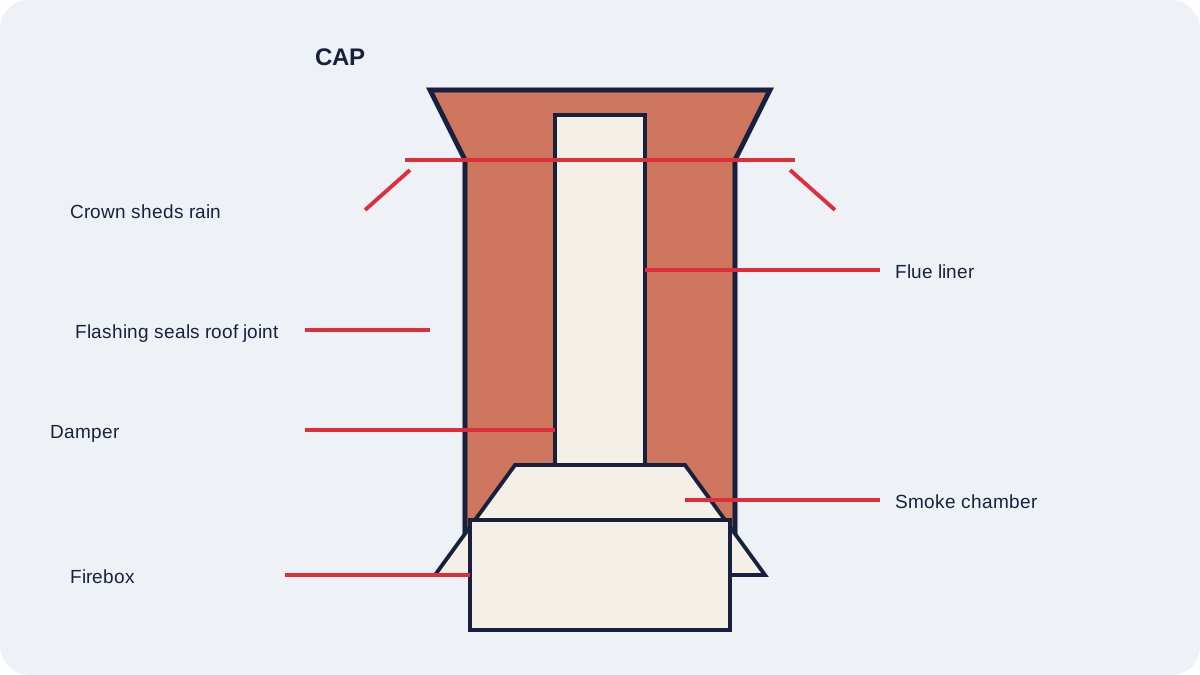
A chase cover is the flat metal panel that caps a prefab metal chimney instead of a masonry crown. Not a crown. Not brick. Most calls start with one of these, and I use this table on the phone before I’ve even seen the roof.
| What you see | What it usually means | The likely fix |
|---|---|---|
| Rust streaks running down the chase or into the firebox below | The cover has corroded through and water is getting past it | New cover |
| The cover looks orange and pitted instead of dull gray | The galvanized coating has worn off and bare steel is rusting underneath it | New cover, before it rusts through completely |
| Water stains showing up on the ceiling near a prefab fireplace | Water is getting past the cover itself, not the roof | New cover, sometimes flashing too |
| A corner of the cover looks lifted, warped, or loose | Screws or seams have failed and the panel isn’t seated flat anymore | New cover |
| Daylight visible at the edge where the cover meets the chase | A seam has opened, and rain and animals both have a way in | New cover |
| Animal noise or debris turning up in an older prefab firebox | A gap in a failed cover is letting them in | New cover |
What this repair costs
There’s no set price on this one. Never has been. Chase covers come in different sizes and metal gauges, and how the old one failed changes what the new one needs. I price it on site after the $59 inspection, once I’ve measured the chase and seen what I’m working with.
What I can tell you up front: two repairs on this site carry a starting price I’ll give you over the phone, cap installation and crown rebuild, both from $350. This isn’t either one. I won’t guess a price here. If you want to see how it stacks up against everything else I run, repair pricing from Americas Chimney Sweep lays out every job side by side.
Call (916) 833-2959 and ask for the $59 inspection, 7am to 7pm, seven days a week. That $59 comes off the total if you go ahead with the replacement, and you’ll have a real number before anything gets scheduled.
How chimney chase cover replacement works
The job itself is simple. Getting there safely on a two-story prefab chase is most of the work.
- I measure the chase at the top, since almost none of them are a perfect rectangle after twenty or thirty years of the house settling.
- The old cover comes off, along with whatever caulking or roofing cement someone added over the years to slow a leak down.
- I check the top of the chimney pipe and the flue collar underneath for rust or damage the old cover was hiding.
- The new cover gets fitted to the actual measurements I took, not the size stamped on the old one.
- It’s set, sealed at the seams, and screwed down so wind can’t work it loose the way the last one probably did.
- I check the flashing where the chase meets the roofline while I’m up there. A bad cover and bad flashing tend to show up around the same age.
Most chase cover replacements take one to three hours once the replacement cover is ready. Roof access and the number of flues can stretch that.
When you don’t need a new chase cover
Not every stained cover needs to go.
A little surface rust on a cover that’s still flat, still sealed at the seams, and not leaking anywhere is often fine to leave alone until the next scheduled inspection. Sacramento’s dry summers help here. A cover that only sees five wet months a year ages slower than one that’s wet most of the year. Most calls like that can wait.
What doesn’t wait: rust streaks actually running into the firebox, a corner that’s visibly lifted, or daylight showing at a seam. They get worse every winter, not slower. They turn into a ceiling stain by February.
If you’re not sure which one you’re looking at, the $59 inspection settles it without talking you into a replacement that isn’t due yet.
Why galvanized chase covers fail on Sacramento-area tract homes
Most chase covers out here are galvanized steel: plain steel with a thin zinc coating over it. That coating keeps the rust away. It wears off eventually. Once it’s gone, bare steel starts rusting on its own, and in my experience that’s usually somewhere around the twelve-year mark.
A huge share of the tract housing across Carmichael, Citrus Heights, and Rancho Cordova went up through the 1960s and 70s with a prefab metal fireplace inside a chase, not a real masonry stack. Most of those original covers are well past that age now. Nobody notices until it leaks. Most homeowners I talk to have no idea their fireplace isn’t masonry at all until I point out there’s no crown up there, just a flat metal panel.
While I’m already on the roof for a cover, I’ll check the seal where the chimney meets the roof too, since it tends to fail on close to the same timeline. Same age, same roof. If water’s already tracked past the flashing and left a stain inside, that’s usually chimney leak repair service territory rather than just a metal swap, and it’s worth mentioning both while I’m up there instead of finding out about the second one on a later trip.
The replacement cover is sized to the chase and fitted around each flue. No metal or product line is promised before that measurement.
Where this repair comes up most
This job comes from all five counties I run out from Nevada City, but it clusters hardest in the valley tract neighborhoods where prefab chimneys are the norm instead of the exception. Not in the foothills. Up there, most of what I see is masonry, so the mix of calls looks different by area.
Down in Placer County, I get a steady run of these calls out toward Roseville and Rocklin, both built out heavily in that same prefab era. A fair number also come from up around chimney sweep Grass Valley, where older homes mix prefab units in among the stone and brick chimneys the area is known for.
Chase cover questions, answered
What is a chimney chase cover?
A chase cover is the flat metal panel on top of a prefab metal chimney that does the job a masonry crown does on a brick chimney. It keeps rain, snowmelt, and animals out of the chase, and it’s usually the first part of a prefab system to fail.
How do I know my chase cover needs replacing?
Look for rust streaks running down the chase, orange discoloration instead of dull gray, or a corner that looks lifted or loose. Any of those, especially on a cover past the ten to twelve year mark, is worth a look before the next rainy season.
What does it cost to replace a chase cover?
There’s no set price, because chase covers vary in size and how far the damage has gone. It’s priced on site after a $59 inspection, once I’ve measured the chase and seen what condition the flue collar underneath is in.
How long does it take to replace a chase cover?
Most replacements take one to three hours once the cover is ready. A steep roof, several flues, or hidden damage adds time.
Can I replace a chase cover myself?
Most chase covers sit on a two-story roof over a prefab chimney. Height changes everything. Getting one measured, fitted, and sealed correctly up there isn’t a weekend project for most homeowners, and a poorly sealed replacement can fail faster than the one it replaced, sometimes within a season.
Reviews from chase cover jobs
The rating sits at 4.95 across 62 Google reviews, and I’ve replied to every single one myself. All sixty-two. If you want to see what other repair calls looked like before you book yours, read what neighbours actually said.
“Michael did a great job of finding and fixing the leak in our chimney chase. He kept us informed of all the details and showed up promptly when he said he would. I highly recommend his services.”
What’s the difference between a chase cover and a chimney crown?
A chase cover sits on top of a prefab metal chimney chase, and it’s sheet metal, usually galvanized steel. A chimney crown sits on top of a masonry stack, and it’s poured concrete or mortar. One rusts, the other cracks. Which you have depends on whether your fireplace is prefab or true masonry.
How long does a chase cover last?
Most galvanized chase covers last ten to fifteen years around here before the coating wears through and rust takes over. Stainless steel holds up longer, often twenty or more, since it doesn’t rely on a coating to fight corrosion. Sacramento’s wet winters speed up whichever one you’ve got sitting flat and holding water.
Why do chase covers rust in the first place?
A chase cover sits flat instead of pitched like a crown, so rain doesn’t shed off it, it pools. That standing water works through the zinc coating on galvanized steel faster than anywhere else on the roofline. Once the zinc’s gone, bare steel underneath rusts fast, especially through a wet Sacramento winter.
Book the inspection
A rusted chase cover doesn’t fix itself over a wet Sacramento winter. It just finds a new seam. Call (916) 833-2959 and ask for the $59 inspection, available 7am to 7pm, seven days a week, and you’ll know whether you need a new cover or just a good look before you spend anything else. Or set up a time online and I’ll call to confirm the details.