
What it actually covers
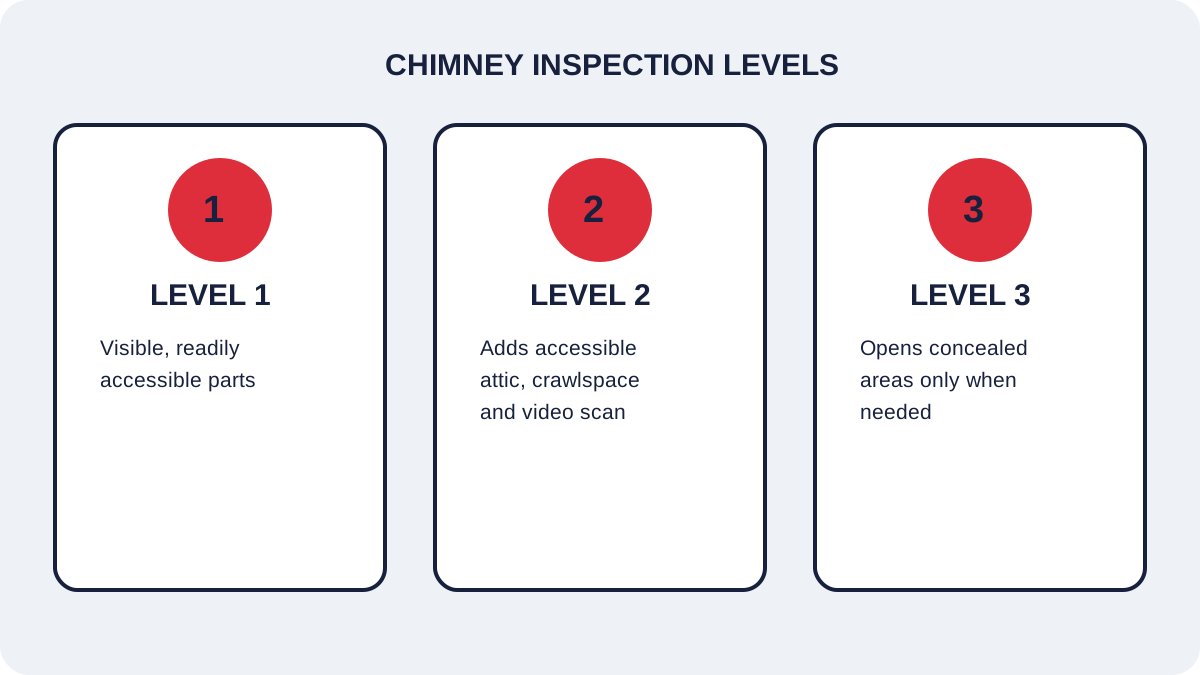
A pre-sale chimney inspection is a visual check of the firebox, damper, smoke chamber, crown, cap and flashing, plus a camera run down the length of the flue so there’s video, not just a description, for whoever reads the report next. That’s the deeper of the two levels most homes ever need, and it exists because a lender or a buyer’s agent wasn’t standing in the room when it happened. They need something on record.
A routine annual check gets by on a flashlight and a mirror. A sale doesn’t, because the report has to stand on its own once it’s out of your hands. If you want to find out what shape the flue is really in before anyone starts negotiating over it, that’s exactly what a pre-sale chimney inspection in Sacramento is built for, and it’s worth pricing out early, since what each level of chimney inspection costs and when you need it breaks down the difference between the flashlight version and the camera version, so nobody’s guessing which one a particular deal requires.
The camera footage matters more than people expect once it leaves the house. A lender or a buyer’s agent who wasn’t on the roof can watch the same flue interior you saw, joint by joint, instead of taking a stranger’s word for it. That’s usually enough on its own to answer a follow-up question without a second visit.
How long it takes
A single-flue home with normal roof access usually takes 30 to 45 minutes for the visual pass. Add the camera scan for the full flue interior, or a second flue, or a steep roof that slows down access, and it runs longer. Nobody quotes a firm number over the phone, because the roof is the variable that actually decides it.
A good number of the chimneys I inspect for a sale have never been swept once. Not neglected exactly, just never on anyone’s list until somebody else is about to own the house. That doesn’t add much time to the visit. It usually just means there’s more to write down.
What it usually finds, most common first
Most pre-sale findings aren’t dramatic once someone puts a real number next to them. Here’s the order I actually see them in, from most common to least.
| Finding | What it looks like | Starting cost |
|---|---|---|
| Buildup from an overdue cleaning | Dark flaking on the firebox floor, a burnt smell | Basic chimney cleaning from $199 |
| A cracked or spalling crown | A hairline crack or chipped edge on the flat cap up top | Chimney crown rebuild from $350 |
| A missing or rusted cap | No mesh visible from the ground, or a rusted-through top | Chimney cap installation from $350 |
| Everything else | Flashing, mortar, a liner issue, anything structural | Priced on site once it’s actually been seen |
That last row covers more of the calls than people expect, and it’s not written that way to dodge the question. A crown crack and a flashing leak can look identical from the ground and cost completely different amounts to fix. Guessing at either one before someone’s actually up on the roof is how a buyer and seller end up negotiating over the wrong number.
What happens if it finds a problem mid-escrow
A finding in the report is a negotiation, almost always, not a reason to cancel the deal. It settles one of three ways. The seller credits the buyer at closing for the cost of the fix. The seller has it repaired before the final walkthrough, if the calendar allows. Or the price moves a little and the house sells as it sits.
Here’s the part that actually decides which way it goes, and it has less to do with the chimney than people assume. A general inspector’s report almost never says the chimney is fine. It says something closer to “recommend evaluation by a qualified chimney professional,” and that line by itself does more to stall a closing than the actual problem usually does, because nobody in the room has a number yet.
Put a real figure next to the vague line, and it turns back into paperwork. I’ve watched a $350 crown crack sit unpriced for most of a week and nearly derail a closing, purely because nobody had attached a dollar amount to it. Once the number showed up, it stopped being a red flag and went back to being a line item on a repair credit.
The finding that looks scariest in a photo is usually the cheapest one on the list. A crack across a crown photographs dramatically from a drone or a ladder shot, and it’s rarely the thing that should actually worry anyone in the transaction.
When nothing needs doing
Not every chimney flagged in a general inspection needs a second visit, and telling a client that is worth more than selling them one they don’t need.
- If the chimney already had a Level 2 inspection within the past year and there’s a written report to hand over, that report usually satisfies the buyer’s side without a repeat visit.
- If the fireplace is a sealed gas unit vented straight through a wall, there’s no masonry chimney behind it for a camera to scan. That’s also outside a masonry license anyway, since a C-29 covers crowns, brick and mortar, not gas fitting.
- If the general inspection came back with nothing flagged near the fireplace at all, there’s no reason to book a specialty inspection preemptively just because the property is under contract.
- If the buyer is waiving both the general and specialty inspections outright, that’s their call to make. It’s not something to talk them out of.
And sometimes the inspection comes back clean.
That’s not a wasted trip. It’s a written record a buyer’s agent can put in the file instead of an unanswered question sitting in the report.
While he’s already up there
A pre-sale visit surfaces the chimney-specific findings, but it’s worth knowing what else tends to show up around the same time, especially heading into fall when a house that’s been sitting on the market suddenly needs a working fireplace for the first open house of the season. So check these before the first cold night if the buyer plans to actually use the fireplace once they move in, and the most common chimney problems covers the rest of what shows up across a full season of inspections, priced individually rather than blended into one guess.
What agents should know before it gets to escrow
The clock is the real problem here, more than the chimney usually is. Book the inspection the week an offer is accepted, not the day before the contingency period runs out. That gap is what turns a finding into a negotiated credit instead of a fire drill three days from closing.
There’s no dispatcher and no rotating crew to coordinate around on this. Ask for the licensed tech who does the work and you get the same person from the first call to the final walkthrough if repairs end up being part of the deal, which matters more in escrow than it does on a routine cleaning, since everyone involved is dealing with the same person twice instead of two different companies.
What’s actually behind the chimney also depends on the house more than most buyers expect. A 1960s tract home in Carmichael or Rancho Cordova usually hides a factory-built metal fireplace in a chase, not a masonry stack, and that changes both the inspection and the repair path entirely. A foothill property in Grass Valley or Nevada City that’s heated with wood daily carries a heavier creosote load than a valley home that lit four or five fires a season, so the same inspection can turn up very different findings depending on which side of the hills the listing sits on.
Who pays for the chimney inspection when selling a house?
It depends on the offer terms, not a fixed rule. Buyers usually order the general inspection and any specialty follow-up, including the chimney. Sellers sometimes book one ahead of listing to head off surprises before an offer is even on the table.
Is a chimney inspection required to sell a house in California?
There’s no statewide law requiring one for every sale. In practice, most lenders, title companies and buyer’s agents ask for a written finding once the general inspection flags anything near the fireplace, which makes it close to universal in this market even without a mandate behind it.
Does the same person do the inspection and the repair?
Yes. Michael runs the inspection and can quote and complete whatever it finds himself, so there’s no second company for an agent to track down mid-escrow. Nothing about using him for the repair is required. A buyer can take the report to anyone they want, and it still holds up on its own.
Get the number early, and the chimney line in the report stops being the thing holding up the closing. The $59 inspection is deductible: it comes off the price of any repair if you go ahead with it, and you only pay it on its own if you don’t. Call (916) 833-2959, 7 a.m. to 7 p.m., seven days a week, and get it booked before the contingency clock starts to matter.