
Do Gas Fireplaces Need to Be Cleaned?
Yes, gas fireplaces need cleaning, just not for the reason wood ones do. There’s no creosote, but burner ports collect dust and spider webs, ceramic logs pick up a chalky mineral film, and the glass fogs with a soot layer you can barely see. Left alone, that buildup blocks burners and cracks seals.
That’s the short version. If yours hasn’t had a look in a few years, an annual gas fireplace cleaning clears the dust and film out before it turns into something worse. If the flame itself is doing something odd, that’s gas fireplace repair in Sacramento territory, not a wipe-down. Either way, pricing gets quoted after someone actually looks at the unit, not off a chart on a website.
What Actually Builds Up Inside One
Wood smoke is loaded with unburned particles, and those particles are what turn into creosote. A gas fire burns cleaner. Propane and natural gas leave almost nothing behind when the flame’s burning the way it should. So whatever does build up comes from somewhere else entirely, and it’s worth knowing what, because the fix for each one is different.
Pull the glass off a gas insert that hasn’t run since spring and the burner ports are often half-webbed. Spiders are drawn to the smell of the gas itself, especially propane, and they build across the ports all summer while the pilot sits cold. Come the first freezing night, that web can smother a burner or push the flame out somewhere it shouldn’t be.
It’s one of the more common reasons a fireplace that lit fine last winter won’t light at all this one.
The other two things are less dramatic. Ceramic logs pick up a fine, chalk-white film from mineral residue baking on, cycle after cycle, which dulls the glow the logs are supposed to give off. The glass front fogs from the inside with a thin soot layer that’s easy to miss, since it isn’t black, it’s more of a gray haze. It happens even on a well-tuned unit, just slower.
Neither is dangerous in year one. By year three or four, it’s usually enough to change how the fireplace burns and how it looks.
| What you notice | What it usually means |
|---|---|
| Fireplace clicks but won’t light | Webbing or dust blocking the pilot or burner ports |
| Logs look duller than they used to | Chalky mineral film building up on the ceramic |
| Glass has a gray haze, not black soot | Normal combustion film, cleanable with the right glass cleaner |
| Flame is yellow or orange, not blue | Combustion problem: stop and call someone, see below |
| Faint gas smell near the unit | Stop using it and call someone, same day |
How Often It Actually Needs a Look
Most valley homes run a gas fireplace four or five months a year, mostly for the look of it rather than the heat, and that kind of light use doesn’t build up fast. Once a year is enough for a general check of the burner and the glass. That’s it.
Newer builds out in Roseville, Rocklin, and El Dorado Hills tend to run sealed gas units with a tighter combustion chamber, and those hold up longer between checks than an older open-front unit. A house that runs the fireplace daily all winter is better off checking every year without fail, instead of stretching it to two or three. That’s more common in the foothills, where a gas insert sometimes does real heating, not just ambiance.
When You Don’t Need to Clean It Yet
If the fireplace lights on the first try, burns with a steady blue-tipped flame, and the glass still looks clear, you’re fine. Run it a dozen times a winter for the ambiance and you can often go two or three years before it’s worth the trouble.
Watch the glass more than anything else.
It’s the easiest thing to check yourself, and it tells you almost everything you need to know before you spend a dime on someone coming out.
When to Stop and Call Someone
Wood chimney work is mostly mechanical. You can brush a flue yourself if you’re willing to get dirty and climb a ladder. Gas is different.
If the flame burns yellow or orange instead of blue, if you smell gas at any point, or if the glass is sooting up faster than it used to, that’s a combustion problem, not a dust problem. It isn’t a DIY fix. It isn’t a cleaning either.
Can I clean a gas fireplace myself?
You can safely wipe down the glass and vacuum around the surround with the unit off and cool. Anything past that, opening the burner, adjusting the pilot, or working near the gas line, isn’t a homeowner job. That’s where it becomes a call, not a Saturday project.
Does a gas fireplace need a chimney sweep the same way a wood one does?
No. There’s no creosote to brush out, so a traditional sweep isn’t the service you need. What it does need is someone checking the burner, the glass, and the venting behind it, which is a different visit than a wood-fireplace cleaning.
While You’re Checking the Rest of the House
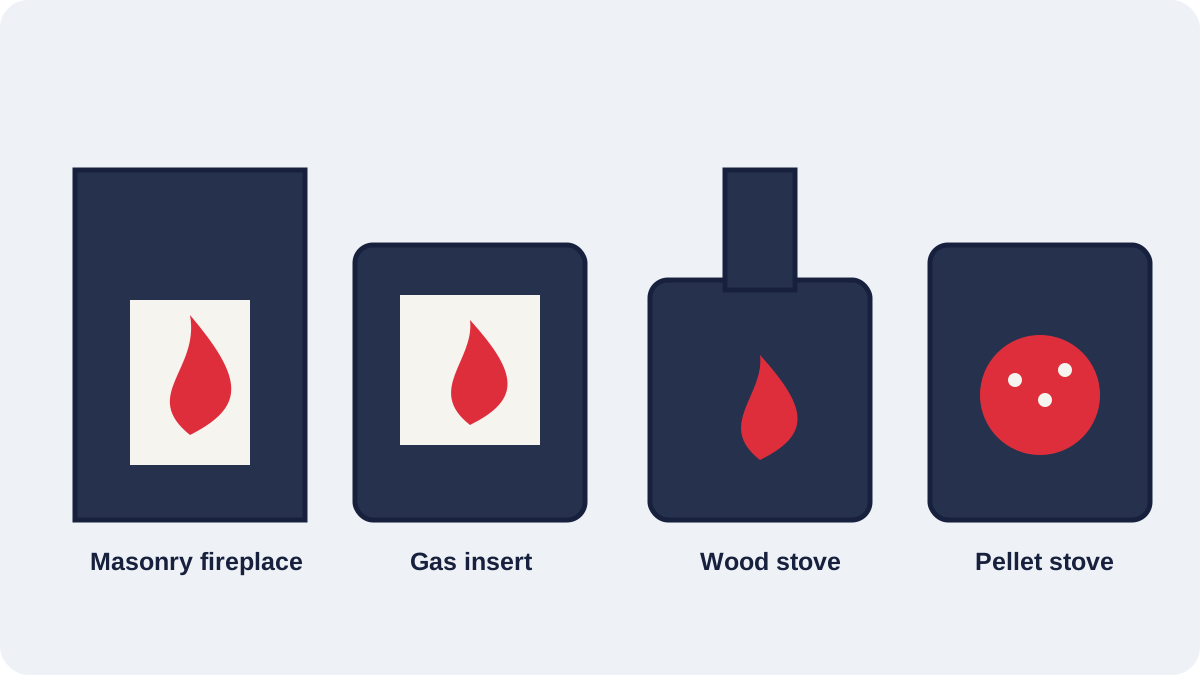
Gas fireplaces aren’t the only appliance that builds up a problem nobody notices until it’s obvious. If a load of laundry needs two cycles to dry, this is almost always the duct, not the machine, the same way spider webs choke off a burner. And if you’re weighing whether to switch from wood to gas, or add a pellet stove instead, run the numbers before you buy. Fuel cost and cleaning schedule are different for all three, and what looks cheaper in the showroom isn’t always cheaper by February.
One more thing. This page was checked by the tech who’d actually be doing the work, not someone guessing at gas appliances from a desk. If that matters to you, see who we send out before you book anything.
Where This Connects to the Chimney Itself
Most gas inserts and log sets still vent through the original masonry chimney, and that flue collects its own problems: cracked crowns, blocked caps, the occasional animal nest. None of it has anything to do with the burner.
That distinction trips people up. A homeowner cleans the glass, the flame looks fine, and they assume the whole system is in good shape. But the chimney above the firebox has been sitting through the same wet winters and dry summers as every other chimney in the valley. Brick soaks up rain in December and bakes it back out by August, whether a gas insert sits in front of it or a wood-burning stack.
That cycle works on the masonry regardless of what’s burning inside it. A crown crack or a loose cap doesn’t announce itself the way a bad flame does. It just sits there until water gets in.
If it’s been a few years since anyone looked at the whole system top to bottom, a chimney inspection is $59, and it’s deductible. It comes off the price of any repair that comes out of it, so the only way you pay for it twice is if there’s nothing to fix. Call (916) 833-2959, 7am to 7pm, seven days a week, and ask for the inspection.