
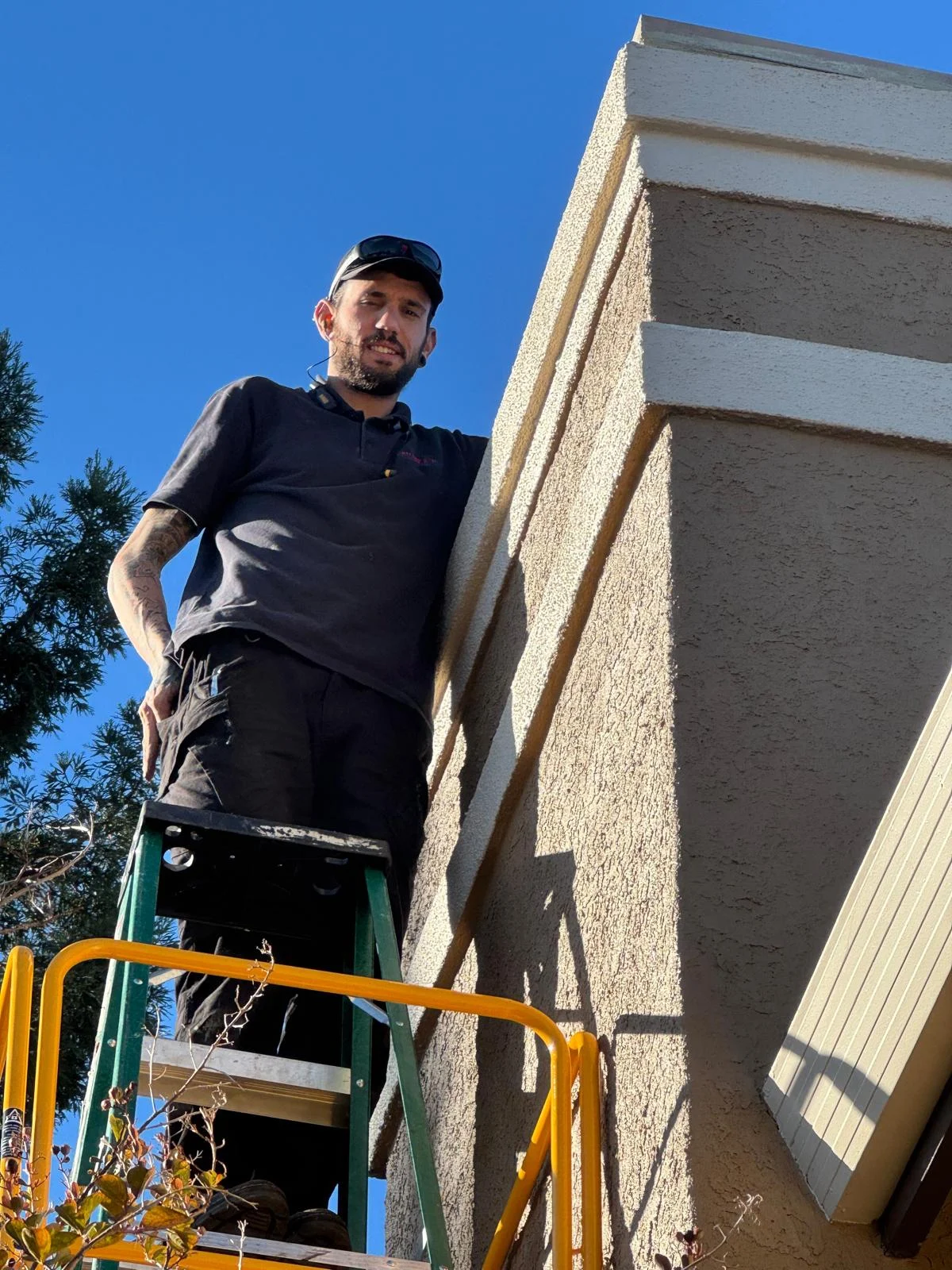
Most of the calls I get about liners start as something else. A homeowner asks about chimney repairs for a smoke smell in the house, or for a home inspector’s report, and the liner turns out to be the actual problem. A $59 inspection is how you find that out first. That $59 credits into the job if you go ahead with it. Call (916) 833-2959, 7 AM to 7 PM, seven days.
What’s actually published
I quote from a starting number, not a range. Only six jobs get one I’ll say out loud before I’ve seen the chimney. A liner isn’t one of them. I’ll explain why below. Here’s what’s confirmed.
| Service | Starting price |
|---|---|
| Chimney inspection | $59, deductible against the job |
| Basic chimney cleaning | from $199 |
| Chimney cap installation | from $350 |
| Chimney crown rebuild | from $350 |
| Dryer vent inspection | $59 |
| Dryer vent cleaning | from $150 |
A liner sits outside that list on purpose. It depends on the material, the flue shape, the height, and what’s already up there. So I price it in person instead of guessing on the phone and adjusting later. The full breakdown of what’s confirmed and what isn’t lives at service pricing.
The $59 inspection is where a liner job actually starts, and it comes off the job if you move forward. You can also book an inspection online if you’d rather skip the call. Phone is (916) 833-2959, 7 AM to 7 PM, seven days.
A liner starts with the $59 inspection, which is deducted if you proceed. The rest is priced on site, after someone has looked at it.
What chimney liner cost depends on
Three liner types cover almost every job I do. They’re not interchangeable. Which one fits your chimney narrows the price before a single dollar figure gets said out loud.
| Liner type | What it is | When it’s the right call |
|---|---|---|
| Stainless steel | A rigid or flexible metal tube run down the existing flue, sized to the appliance connected to it. | Sound masonry flue, or any wood stove or fireplace insert that needs a properly sized connection. |
| Cast-in-place | A refractory cement mix poured or pumped into the flue, forming a new smooth-walled liner around a bladder that gets removed once it cures. | Cracked or crumbling clay tile flues that also need structural strength back, not just a new interior surface. |
| HeatShield | A cerfractory sealant troweled or poured against the existing clay tile, closing gaps and cracks without removing the old tile. | Tile that’s cracked but the flue is still straight and round enough to seal rather than replace outright. |
A stainless steel chimney liner is the one I install most. It’s the option for both a straightforward re-line and a brand-new wood stove hookup. Cast-in-place and HeatShield solve a narrower problem: a flue whose tile is compromised but whose structure is otherwise fine. If the inspection turns up less than that, you might be looking at chimney repairs to the crown or the cap instead. That’s a cheaper problem to have.
How much does it cost to reline a chimney
Relining a chimney has no flat rate, because labor and material change with every flue. A straight masonry flue taking a stainless liner for a wood stove is a different job than a cracked clay tile flue needing cast-in-place cement. I quote it after the $59 inspection, once I know which one you’ve actually got.
Four things move it most: liner material, chimney height, whether the flue runs straight or has an offset partway up, and how much old tile has to come out first. An offset flue takes longer to fish a liner through than a straight one. A taller foothill chimney takes more material than a single-story valley home. None of that has a fixed dollar figure until I’ve seen it. That’s the honest answer instead of a made-up range.
Chimney liner replacement cost, and when it’s actually a repair
Chimney liner replacement cost comes up most often after an inspection finds a cracked tile, not because a liner failed outright. A crack doesn’t always mean the whole flue needs pulling and repouring. Sometimes it means one section. Sometimes HeatShield seals it without removing anything at all.
So don’t assume replacement is the only path once a crack shows up. That’s exactly what the $59 inspection settles. It’s credited into the job either way, whether the fix turns out to be a full liner or something smaller.
When you don’t need a new liner
If your flue is straight and round, and the tile is intact with no cracking or gaps at the joints, you don’t need a liner. Get it inspected on a normal schedule. Leave it alone. A lot of what gets sold as “your liner is failing” is really just a dirty flue. It looks worse under a flashlight than it is once it’s swept.
The exception is anything connected to a wood stove or insert that was never sized to that appliance. That liner didn’t fail on its own. It was wrong for the job from day one, and no amount of cleaning fixes that.
Why an insert changes the liner math
Here’s the thing most homeowners don’t know until I’m standing in their living room. Installing a fireplace insert almost always means a new liner comes with it, even if the old chimney has never given anyone trouble, because an open masonry fireplace flue is oversized for the insert’s exhaust. Hook the insert to that oversized flue with no liner and the smoke has too much room to cool before it clears the top. It stalls, condenses, and leaves creosote running down brick that used to stay dry.
That’s why an insert almost always needs a new liner with it, sized to the insert’s own flue collar instead of the old fireplace opening.
It’s not an upsell.
It’s the difference between an insert that draws clean and one that smokes into the room on a windy night.
What Sacramento chimneys actually need
A lot of the unlined brick chimneys I open in Midtown and East Sacramento were built before a liner was code-required at all. So what looks like “the liner needs replacing” is often “there was never one to begin with.” That changes the conversation from a repair to a first install. It usually means cast-in-place, since there’s no metal liner to swap and the flue needs the structural help.
Foothill chimneys tell a different story. Nevada City and Grass Valley homes burn wood daily through the winter, not a handful of times a season. That kind of steady heat cycling ages a clay tile liner faster than an occasional valley fire ever will, so a cracked tile up there gets found sooner, and it gets sealed or replaced before creosote finds every gap in it.
What a low liner quote usually means
A number quoted over the phone with no inspection behind it is a guess dressed up as a price. It either climbs once someone’s actually on your roof, or it stays low because the job skips a step.
The old tile doesn’t get fully cleared. The liner gets undersized to save material. The top doesn’t get sealed properly against the crown.
None of that shows up until the first hard winter.
A real liner quote comes after someone has measured your flue and checked what the connected appliance actually needs, not a number pulled from a price list built for someone else’s chimney. That’s what the $59 inspection is for. It’s not a sales visit. It’s the measurement the price depends on.
What people say once the number’s real
“The owner was incredibly prompt, professional, and highly communicative.” That’s Brian, on a different job. Same person who’d walk your flue and give you the liner number in person.
Google has this business at 4.95 across 62 reviews right now, a small enough count that you can read all of them instead of trusting an average. Michael replied to every one personally. More of what past customers have said is at reviews from homeowners we have worked for.
Every liner job here is Michael, in person, start to finish. Americas Chimney Sweep is licensed CSLB #1150991, C-29 Masonry, and books 7 AM to 7 PM, seven days.
Is a chimney liner worth the cost?
Yes, when the flue actually needs one. A liner protects the masonry from heat and creosote acids, and it’s what lets your furnace or fireplace draft correctly instead of spilling exhaust back into the house. Skip it on a chimney that doesn’t need one and you’re not saving money, you’re gambling with the house.
Why are chimney liners so expensive?
Because the material and the labor both run high. Stainless liner has to be sized to your exact flue and appliance, insulated in most installs, and fished down a chimney that’s rarely a straight shot. Add demolition if an old clay liner has to come out first, and the hours stack up fast.
Common liner cost questions
How much should I expect to pay for a chimney liner in Sacramento?
There’s no flat number, because stainless, cast-in-place, and HeatShield price differently and your flue decides which ones apply. Every liner job starts with a $59 inspection, credited into the work if you go ahead, so you get a real figure before you commit to anything.
Does the $59 inspection count toward the liner job?
Yes. The $59 is credited straight into the price of the work if you move forward with the liner or any other repair it turns up. You only pay it as a standalone fee if you decide not to proceed.
Can a liner be repaired instead of replaced?
Sometimes. A cracked tile with an otherwise sound flue can often be sealed with HeatShield instead of pulled and repoured. That decision gets made at the inspection, once the crack and the surrounding tile have actually been seen up close.
Is a cheaper liner quote ever the right call?
Only if it’s backed by the same inspection everyone else’s price is based on. A number with no flue measurement behind it isn’t cheaper. It’s unmeasured, and the gap usually shows up as undersized material or a skipped step once the job’s done.
The real number only shows up once someone has actually looked at your flue. That’s what the $59 inspection is for. It credits into the job if you go ahead. Call (916) 833-2959, 7 AM to 7 PM, seven days, or book an inspection online and get a straight answer before you spend on the wrong fix.