
It starts the same place dryer duct cleaning does for one house: the $59 inspection. Just run across the whole property instead of one machine. Call (916) 833-2959, 7am to 7pm, seven days, and I’ll walk you through scheduling it building by building.
Why a building doesn’t wait for a symptom
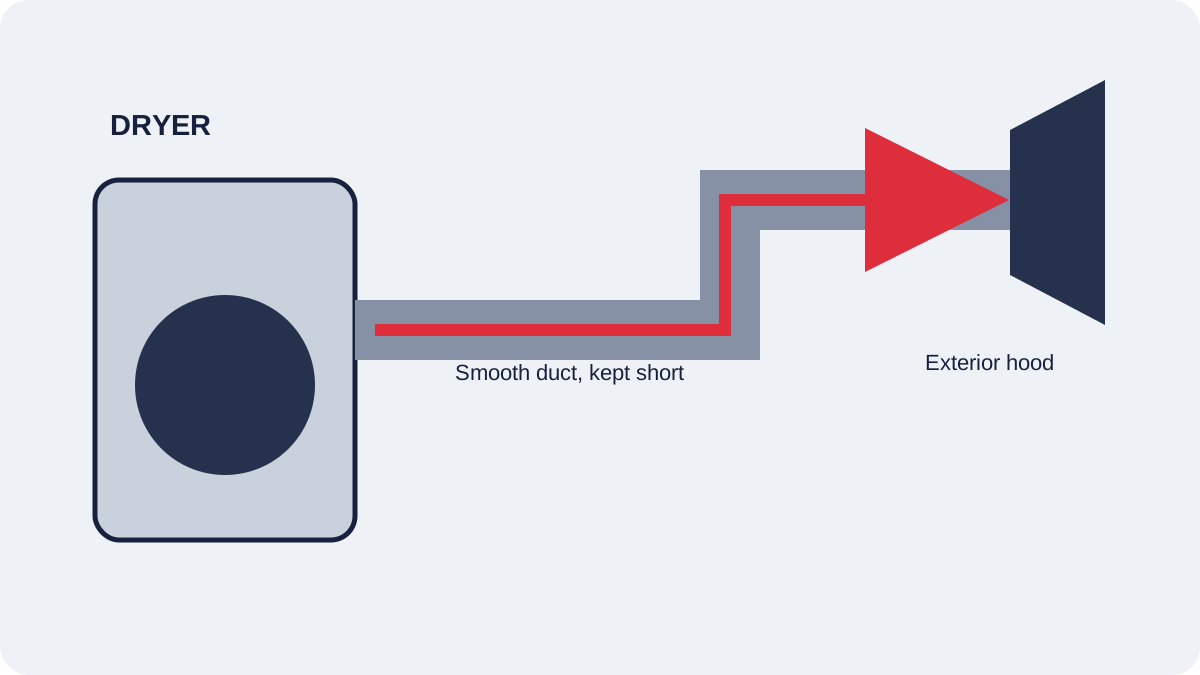
In stacked units, the dryer vent rarely runs a straight shot to outside air. It usually joins a shared vertical chase, climbing two or three floors before it terminates on the roof. Lint from every unit above passes through the ones below it on the way out. One clogged trap upstream can back a dryer up two floors down. Wrong unit complains, most of the time.
That’s why apartment dryer vent cleaning and condo dryer vent cleaning don’t work well as one-off calls. Servicing the whole run at once is the only way to know it’s clear end to end, not just clear behind the machine that happened to complain first.
How often should apartment dryer vents be cleaned?
Most run once a year. Some need more. Buildings with long shared vertical chases or heavy laundry-room traffic often need it every six to nine months instead, since lint moving through a shared run builds up faster than it does in a single house with its own short line to an outside wall.
Setting up a building or portfolio program
A property manager shouldn’t have to guess which run caused the complaint. Every building starts with a site assessment. Michael looks at the layout, access, and how the units use their dryers before any work is priced.
The approach doesn’t change between a small HOA and a larger complex. Only the number of lines does.
Insurance and fire-risk documentation
More property insurers are asking multi-family owners to show proof of regular dryer vent service, especially after a fire loss anywhere in a shared building. It’s a real risk, not paperwork. A vent packed with lint sitting behind a hot heating element is exactly how those fires start, and a shared chase means one bad unit puts every unit on that run at risk, not just the one it’s attached to.
Local fire code generally requires dryer exhaust to terminate outside the building and stay clear of obstruction. I don’t hold a certification tied to that code today. So I won’t claim one. What I can give you is a dated record that the line was actually opened and cleared.
The site assessment
The visit starts with the same $59 dryer vent inspection a single house books, run against a sample of units or the whole property depending on size. That tells both of us what’s actually in the lines before anyone commits to a full schedule. Move forward, and the $59 folds into the job instead of sitting on top of it. One visit, one price, per unit.
| Job | Starting price |
|---|---|
| Dryer vent inspection, per unit or sample | $59 |
| Dryer vent cleaning, per unit | from $150 |
Those are the same starting numbers a single house pays. Floor doesn’t matter for one dryer. See why a roof vent costs more than a ground-floor run for how that works.
A shared chase feeding a roof cap two or three floors up is a different scope. More line, harder access, more units on one run. The rest is priced on site, after someone has looked at it.
Call (916) 833-2959, 7am to 7pm, seven days, and ask for the $59 dryer vent inspection. Get a real number for your property before you budget off a guess.
Working around tenants instead of around me
A laundry room that closes for a day is a building manager’s real complaint, more than the price of the job. I work unit by unit instead of shutting the whole room down at once, so tenants can keep using machines I’m not working on yet. Off-peak hours help. So does a notice posted ahead of time, so nobody’s mid-load when I need to pull a dryer out from the wall.
These visits turn up more than lint, often enough that it’s worth planning for. Sometimes it’s a crushed section, or a joint that came apart, and I’ll replace the crushed duct behind the machine instead of cleaning around it. Sometimes it’s a run that was never sized right: long, twisted, fighting airflow on every load. There, the fix is to shorten the run so the dryer can actually breathe, not clean the same restriction every six months.
What you get after the visit
Every unit gets a dated record. What was found, what was cleared, the condition of the exterior termination.
A property manager can keep the inspection findings with the building records. This page doesn’t promise a compliance report, a code certificate, or an insurance certificate.
When a building doesn’t need a full program
A small duplex or fourplex with short, independent runs to each unit’s own exterior wall doesn’t need a standing program the way a stacked apartment building does. Every dryer has its own line. None of them share a chase. Servicing them as they come up is often enough, the same way it works for a single house.
The math changes once units start sharing a run, because then one neglected line becomes everyone’s problem. If you’re not sure which situation you have, the $59 assessment answers that honestly before you commit to more than you need.
Proof
Google has Americas Chimney Sweep at 4.95 across 62 reviews. I’ve replied to every one myself. None of those 62 are from a commercial or multi-unit job yet. For what other jobs looked like, what our customers say is worth reading before you book.
Service area
This runs out of Nevada County and covers five counties from there: Nevada, Placer, El Dorado, Sacramento, and Yolo. Newer apartment and condo construction toward Roseville, Rocklin, and El Dorado Hills tends to stack laundry closets on upper floors with a shared roof termination. One clogged trap, three restricted units. Toward the valley floor, chimney cleaning Elk Grove CA is also inside the five-county service area.
Does insurance require dryer vent cleaning?
No standard policy names a required cleaning interval. Some carriers ask about fire-prevention maintenance during underwriting or after a claim, though the specifics vary by carrier and by building. A property manager who wants a firm answer should ask their broker. See the documentation section above for what this visit does and doesn’t provide.
What are the code requirements for multi-unit dryer vents?
California’s Mechanical Code, section 504.4, sets the installation rules: exhaust ducts terminate outside, no screens at the termination, and no tie-in to a vent, chimney or vent connector. Multi-family buildings also fall under Type 2 dryer rules in section 908.3.3. None of that sets a required cleaning interval or a fire-marshal certificate.
Who is responsible for dryer vent cleaning, landlord or tenant?
In most leases, the landlord or HOA carries responsibility for shared exhaust systems, since a restricted vent behind one unit affects the units around it. Individual tenants rarely have the access or authority to service a vent that runs through common walls. Who pays for the visit is a separate lease term, covered above.
Questions from property managers, answered
Do condo and HOA buildings need dryer vent cleaning every year?
Most do, especially where units share a vertical chase to one roof termination. A building with heavy laundry use or a long shared run often needs it closer to every six to nine months. The $59 inspection sets the actual interval for your building instead of guessing at a default.
How is apartment dryer vent cleaning different from a single house?
The physics are the same: lint, heat, a restricted line. The layout usually isn’t. A house has one dryer on its own short run. An apartment building often has several dryers feeding one shared chase, so a clog anywhere on that run can affect units that never called about it.
Is there commercial dryer vent cleaning near me for a whole building, not just one unit?
Yes. I run the inspection and cleaning per unit but schedule it across the whole property in one visit or a short series, rather than treating each unit as a separate call weeks apart. Call and I’ll confirm your address is in the five-county service area before setting a date.
Who pays for dryer vent cleaning in a rental, the landlord or the tenant?
That’s a lease term between the owner and the tenant, not something I decide. I bill whoever books and authorizes the work, usually the property manager on a multi-unit job.
Can this be scheduled without shutting down the whole laundry room?
Yes. Machines get serviced one at a time, so the room stays partly usable through most of the visit. Book off-peak hours and post a notice ahead of time. That helps too.
Do you provide documentation for insurance or a fire marshal?
The findings are discussed after the visit. This page doesn’t promise a report format or a certificate tied to a specific fire code.
A building that waits for a symptom is a building that’s already behind. Call (916) 833-2959, 7am to 7pm, seven days, and ask for the $59 dryer vent inspection to start the assessment. Or get on our schedule if you already know the property needs to be on a cycle.